
By Ashok Prasad, Founder, Niyyam
Published: April 2026
Introduction
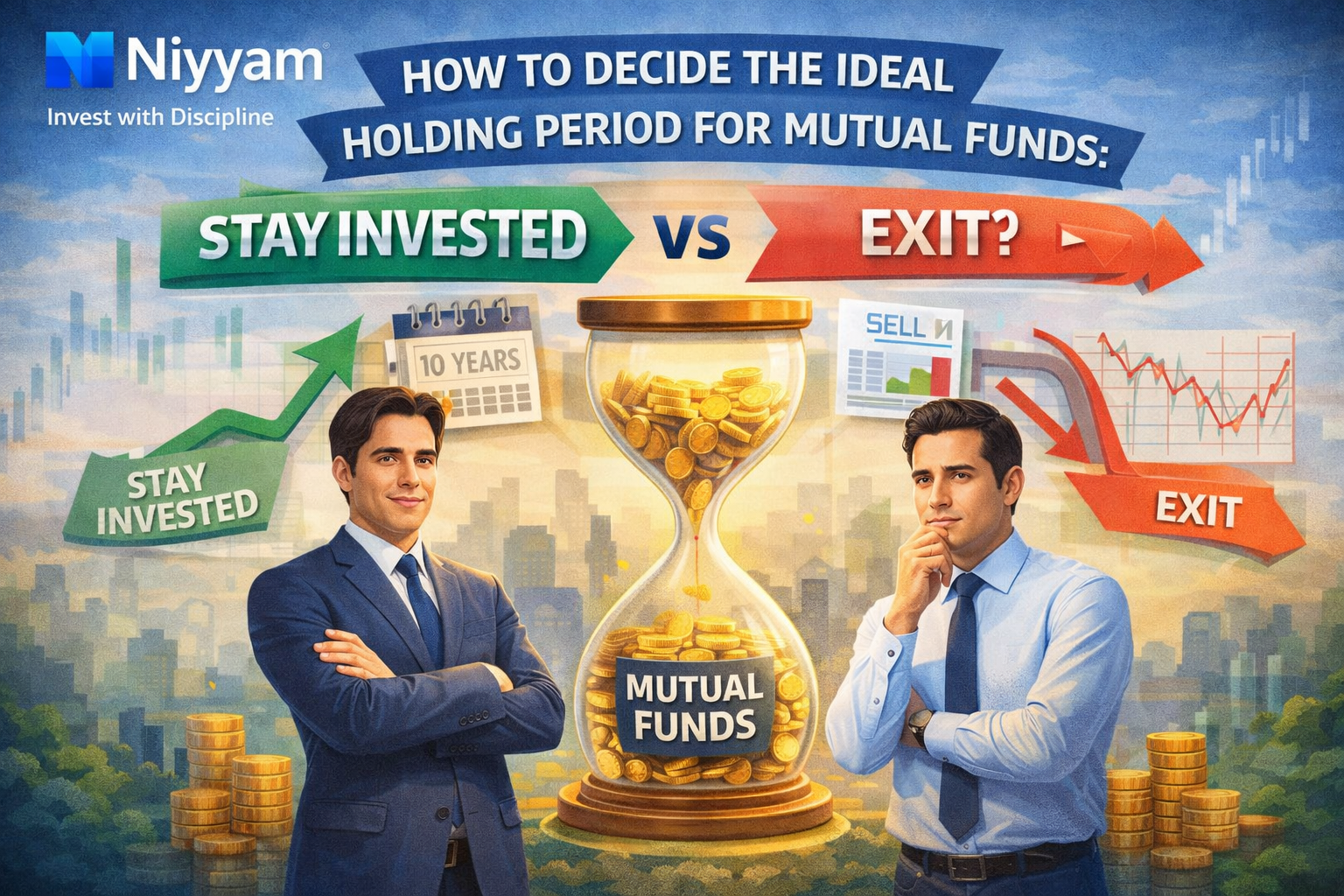
How to decide the ideal holding period for mutual funds is a crucial question for investors in 2026.
Many investors either exit too early due to fear or stay invested too long in underperforming funds, which impacts long-term wealth creation.
Understanding when to stay invested and when to exit is essential for maximizing returns and minimizing mistakes.
💡 Key Takeaways
- Holding period depends on fund category and goals
- Equity funds require longer investment horizons
- Debt funds are suitable for shorter durations
- Exiting too early can reduce compounding benefits
- Staying invested blindly can lead to underperformance
- A structured exit strategy is essential
Direct Answer
To decide the ideal holding period for mutual funds:
- Stay invested in equity funds for 5+ years
- Hold debt funds for short-term goals
- Exit when the fund consistently underperforms, or goals are met
Why Holding Period Matters
Table 1: Impact of Holding Period
| Holding Period | Outcome |
|---|---|
| Short-term | Volatility, uncertain returns |
| Medium-term | Moderate stability |
| Long-term | Wealth creation |
Compounding works effectively only when investments are held long enough.
As per SEBI regulations, investors should align investment duration with financial goals and risk profile.
Holding Period by Fund Category
Table 2: Ideal Holding Period
| Category | Holding Period |
|---|---|
| Large Cap | 5–7 years |
| Mid Cap | 7–10 years |
| Small Cap | 10+ years |
| Hybrid | 3–5 years |
| Debt | 0–3 years |
To understand categories better, refer to How to Decide Which Mutual Fund Category to Invest In (Large, Mid, Small, Hybrid, Debt)? (2026 Framework).
Holding Period Based on Financial Goals
Table 3: Goal-Based Holding Period
| Goal | Duration | Fund Type |
|---|---|---|
| Emergency fund | Immediate | Liquid funds |
| Short-term goals | 1–3 years | Debt funds |
| Long-term goals | 5+ years | Equity funds |
Before investing, ensure proper structure using What is the Right Order of Investing: Emergency Fund → Insurance → Mutual Funds? (2026 Financial Planning Framework).
When to Stay Invested
Table 4: Stay Invested Conditions
| Situation | Action |
|---|---|
| Market correction | Continue investing |
| Short-term volatility | Stay patient |
| Goal not achieved | Continue |
When to Exit Mutual Funds
Table 5: Exit Triggers
| Situation | Action |
|---|---|
| Goal achieved | Exit gradually |
| Consistent underperformance | Switch fund |
| Change in financial goals | Reallocate |
| Fund strategy change | Review |
Real-Life Example
Table 6: Investor Comparison
| Investor | Strategy | Result |
|---|---|---|
| Investor A | Exited early | Missed gains |
| Investor B | Stayed disciplined | Higher returns |
Common Mistakes Investors Make
Table 7: Mistakes vs Solutions
| Mistake | Solution |
|---|---|
| Panic selling | Stay disciplined |
| Holding bad funds | Review periodically |
| Ignoring goals | Align investments |
| Over-trading | Reduce switching |
To avoid emotional investing, refer to How to Select Mutual Funds Without Looking at Past Returns? (2026 Smart Investor Strategy).
Real-Life Insight
Most investors:
- Exit during market corrections
- Enter at market peaks
- Lacks a clear exit strategy
Successful investors:
- Follow a plan
- Stay invested during volatility
- Exit based on goals, not emotions
Advanced Strategy: Goal-Based Exit Planning
Table 8: Exit Planning
| Goal | Strategy |
|---|---|
| Short-term | Lump sum exit |
| Long-term | Gradual withdrawal |
| Retirement | SWP |
Step-by-Step Holding Period Framework
Table 9: Decision Process
| Step | Action |
|---|---|
| 1 | Identify goal |
| 2 | Choose category |
| 3 | Define duration |
| 4 | Monitor performance |
| 5 | Exit strategically |
Case Study: Staying vs Exiting
Table 10: Case Study
| Strategy | Outcome |
|---|---|
| Early exit | Lower returns |
| Disciplined holding | Wealth creation |
Key Learning
- Patience improves returns
- Discipline beats timing
When NOT to Exit
Table 11: Avoid These Situations
| Situation | Reason |
|---|---|
| Market fall | Temporary |
| Short-term loss | Normal |
| News-driven panic | Emotional |
Scenario-Based Holding Strategy
Table 12: Practical Scenarios
| Situation | Strategy |
|---|---|
| Beginner | Long-term SIP |
| Moderate investor | Balanced approach |
| Aggressive investor | Long holding |
Quick Rule of Thumb
Table 13: Simple Guide
| Category | Minimum Holding |
|---|---|
| Equity | 5 years |
| Hybrid | 3 years |
| Debt | 1 year |
Best vs Worst Scenario
Table 14: Comparison
| Approach | Result |
|---|---|
| Frequent exit | Poor returns |
| Long-term holding | Higher returns |
Advanced Insight: Power of Compounding
Long holding periods allow compounding to work effectively.
- Returns generate additional returns
- Wealth grows exponentially over time
Case Study: Compounding Effect
Table 15: Compounding Impact
| Duration | Growth |
|---|---|
| 3 years | Limited |
| 5 years | Moderate |
| 10 years | Significant |
Exit Strategy Checklist
Table 16: Checklist
| Question | Yes/No |
|---|---|
| Goal achieved? | ✔ |
| Fund underperforming? | ✔ |
| Portfolio imbalance? | ✔ |
| Need liquidity? | ✔ |
Advanced Strategy: Review Frequency
Table 17: Review Timeline
| Frequency | Action |
|---|---|
| Quarterly | Check performance |
| Annual | Rebalance |
| Goal-based | Exit |
Final Decision Framework
Table 18: Decision Guide
| Situation | Action |
|---|---|
| Market volatility | Stay invested |
| Goal achieved | Exit |
| Fund underperformance | Switch |
Frequently Asked Questions (FAQs)
1. What is the ideal holding period for equity funds?
Typically 5–10 years, depending on category.
2. Should I exit during a market crash?
No, market crashes are temporary and often present opportunities.
3. How often should I review my investments?
At least once or twice a year.
4. When should I exit a mutual fund?
When goals are achieved, or fund consistently underperforms.
Final Verdict
The ideal holding period depends on goals, risk, and fund type.
A disciplined investor:
- Stays invested during volatility
- Exits based on goals
- Avoids emotional decisions
Long-term discipline is the key to successful investing.
Disclaimer
This content is for educational purposes only and does not constitute investment advice.
Mutual fund investments are subject to market risks. Investors should read all scheme-related documents carefully before investing and consider their financial goals, risk tolerance, and investment horizon.
Share this guide with your friends, family, and colleagues to help them make better financial decisions.
If this article helped you, share it with at least one person who needs this guidance.
Leave a Reply