
By Ashok Prasad, Founder, Niyyam
Published: March 2026
Introduction
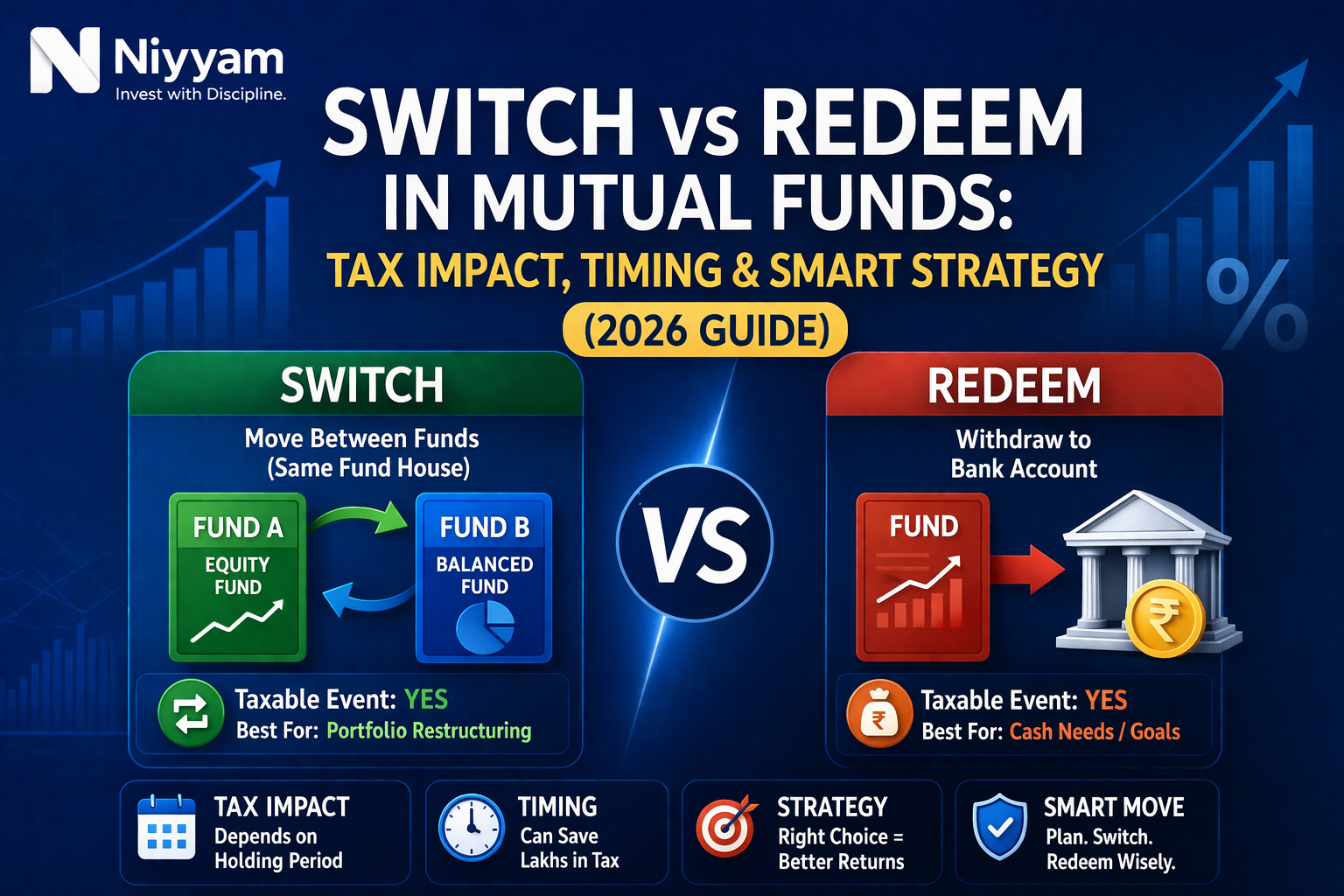
Switching vs. redeeming mutual funds is one of the most important decisions every investor must understand. Many investors make mistakes in switch vs redeem mutual funds because they do not fully understand the tax impact, timing, and strategy involved.
Many investors believe that switching is just a transfer and does not attract tax, while redemption is considered taxable. This misunderstanding often leads to unexpected tax liabilities and poor portfolio decisions.
The truth is simple:
Both switching and redeeming mutual funds are taxable events.
The real difference lies in:
- Your objective
- The timing of the action
- The tax impact
💡 Key Takeaways
- Switch and redeem both trigger taxation
- A switch is used for portfolio restructuring
- Redeem is used for withdrawing money
- Tax depends on holding period and fund type
- Timing plays a critical role in tax efficiency
- Frequent switching can reduce overall returns
Understanding this correctly can help you optimize returns, reduce unnecessary taxes, and build a better portfolio.
Direct Answer
Switching mutual funds means moving money from one scheme to another within the same fund house and is treated as a redemption for tax purposes, while redeeming means withdrawing money to your bank account. Both are taxable, and the choice depends on your financial goal.
What is Redemption in Mutual Funds?
Redemption means selling your mutual fund units and receiving the proceeds in your bank account.
Key Features
| Feature | Explanation |
|---|---|
| Purpose | Withdraw money |
| Taxation | Applicable |
| Liquidity | High |
| Outcome | Cash received |
Example
| Particular | Amount |
|---|---|
| Investment | ₹2,00,000 |
| Redemption Value | ₹3,00,000 |
| Capital Gain | ₹1,00,000 |
Tax applies based on the holding period.
What is Switching in Mutual Funds?
Switching means transferring your investment from one scheme to another within the same fund house.
Key Features
| Feature | Explanation |
|---|---|
| Purpose | Portfolio adjustment |
| Taxation | Applicable |
| Cash received | No |
| Outcome | Remains invested |
Example
Switch:
- Large-cap fund → Mid-cap fund
- Debt fund → Equity fund
Switch vs Redeem: Core Difference
| Factor | Switch | Redeem |
|---|---|---|
| Meaning | Transfer between funds | Withdraw money |
| Taxation | Yes | Yes |
| Cash received | No | Yes |
| Purpose | Portfolio change | Liquidity |
Tax Impact of Switch vs Redeem (Critical Section)
This is where most investors make mistakes.
Equity Mutual Funds
| Holding Period | Tax Type | Rate |
|---|---|---|
| Less than 1 year | STCG | 20% |
| More than 1 year | LTCG | 12.5% (above ₹1.25 lakh) |
Key Insight
Switch = Sell + Buy
So even though money remains invested, tax is triggered.
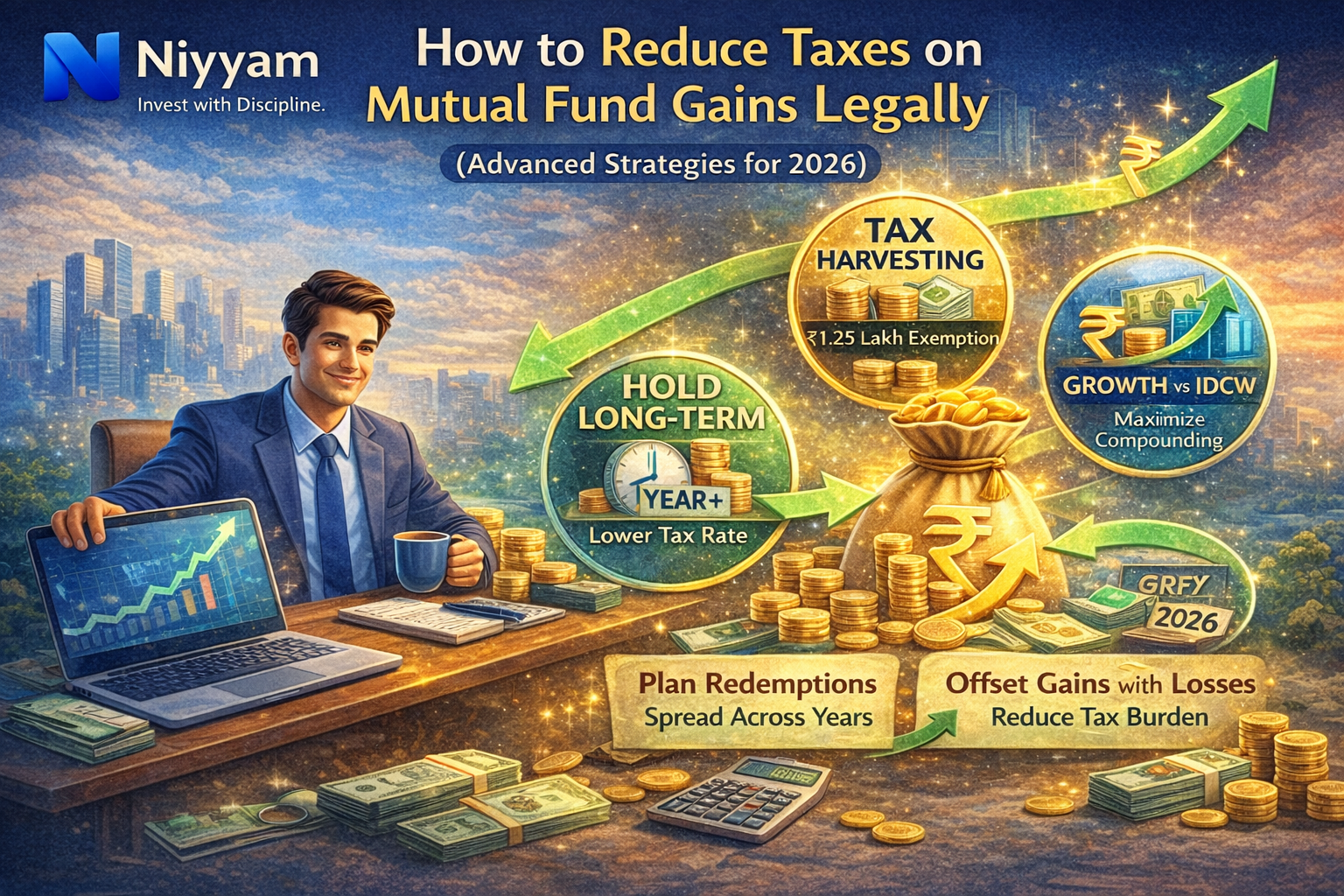
To reduce tax impact, you should also read “How to Reduce Taxes on Mutual Fund Gains Legally (Advanced Strategies for 2026)”.
Real Tax Example (Very Important)
Scenario: ₹5 Lakh Investment
| Particular | Value |
|---|---|
| Investment | ₹5,00,000 |
| Current Value | ₹7,00,000 |
| Gain | ₹2,00,000 |
Case 1: Switch
| Action | Tax |
|---|---|
| Switch executed | Taxable |
| Taxable gain | ₹75,000 (after exemption) |
| Tax | Applicable |
Case 2: Redeem
| Action | Tax |
|---|---|
| Redeem executed | Taxable |
| Taxable gain | Same |
| Tax | Same |
No tax difference.
When Should You Switch?
Switching should be done strategically.
Use Cases
| Situation | Action |
|---|---|
| Fund underperformance | Switch |
| Asset allocation change | Switch |
| Risk management | Switch |
Practical Scenario
If a small-cap fund becomes too risky, switching to a large-cap fund can stabilize your portfolio.
To understand how to identify bad funds, refer to “How to Identify a Bad Mutual Fund? 7 Warning Signs Investors Must Know (2026 Guide)”.
When Should You Redeem?
Redemption is used when you need money.
Use Cases
| Situation | Action |
|---|---|
| Financial goal achieved | Redeem |
| Emergency need | Redeem |
| Regular income | Redeem |
Timing Matters (Very Important)
Timing can significantly change tax liability.
Example
| Holding Period | Tax Impact |
|---|---|
| 11 months | 20% tax |
| 13 months | 12.5% tax |
Waiting slightly can reduce the tax burden.
Switch vs Redeem: Cost Comparison (Real Case)
Scenario: ₹10 Lakh Portfolio
| Action | Result |
|---|---|
| Frequent switching | High tax |
| Planned switching | Controlled tax |
| Timed redemption | Tax-efficient |
Insight
Unplanned actions lead to:
- Higher tax
- Lower returns
Role of Market Conditions
| Market Type | Strategy |
|---|---|
| Bull market | Avoid frequent switching |
| Bear market | Strategic switching |
| Volatile | Stay disciplined |
Switch vs Redeem vs STP
Comparison
| Feature | Switch | Redeem | STP |
|---|---|---|---|
| Taxation | Yes | Yes | Yes |
| Purpose | Shift funds | Withdraw | Gradual shift |
| Risk control | Medium | High | High |
To understand gradual transfers, read “SWP in Mutual Funds Explained: How to Create Monthly Income (2026 Guide)”.
Step-by-Step Decision Framework
Ask These Questions
| Question | If Yes | If No |
|---|---|---|
| Need money? | Redeem | Continue |
| Fund underperforming? | Switch | Hold |
| Tax impact high? | Delay | Proceed |
Common Mistakes Investors Make
| Mistake | Impact |
|---|---|
| Thinking switch is tax-free | Wrong decisions |
| Frequent switching | High tax |
| Panic redemption | Loss + tax |
| Ignoring holding period | Higher tax |
Real-Life Investor Example
Investor A
- Switches frequently
- Pays high tax
Investor B
- Plans switch carefully
- Minimizes tax
| Investor | Result |
|---|---|
| A | Lower returns |
| B | Higher returns |
Advanced Strategy (Smart Investors Use This)
Approach
| Phase | Strategy |
|---|---|
| Accumulation | Avoid switching |
| Adjustment | Limited switching |
| Withdrawal | Strategic redemption |
You can also check these Articles
To strengthen your understanding:
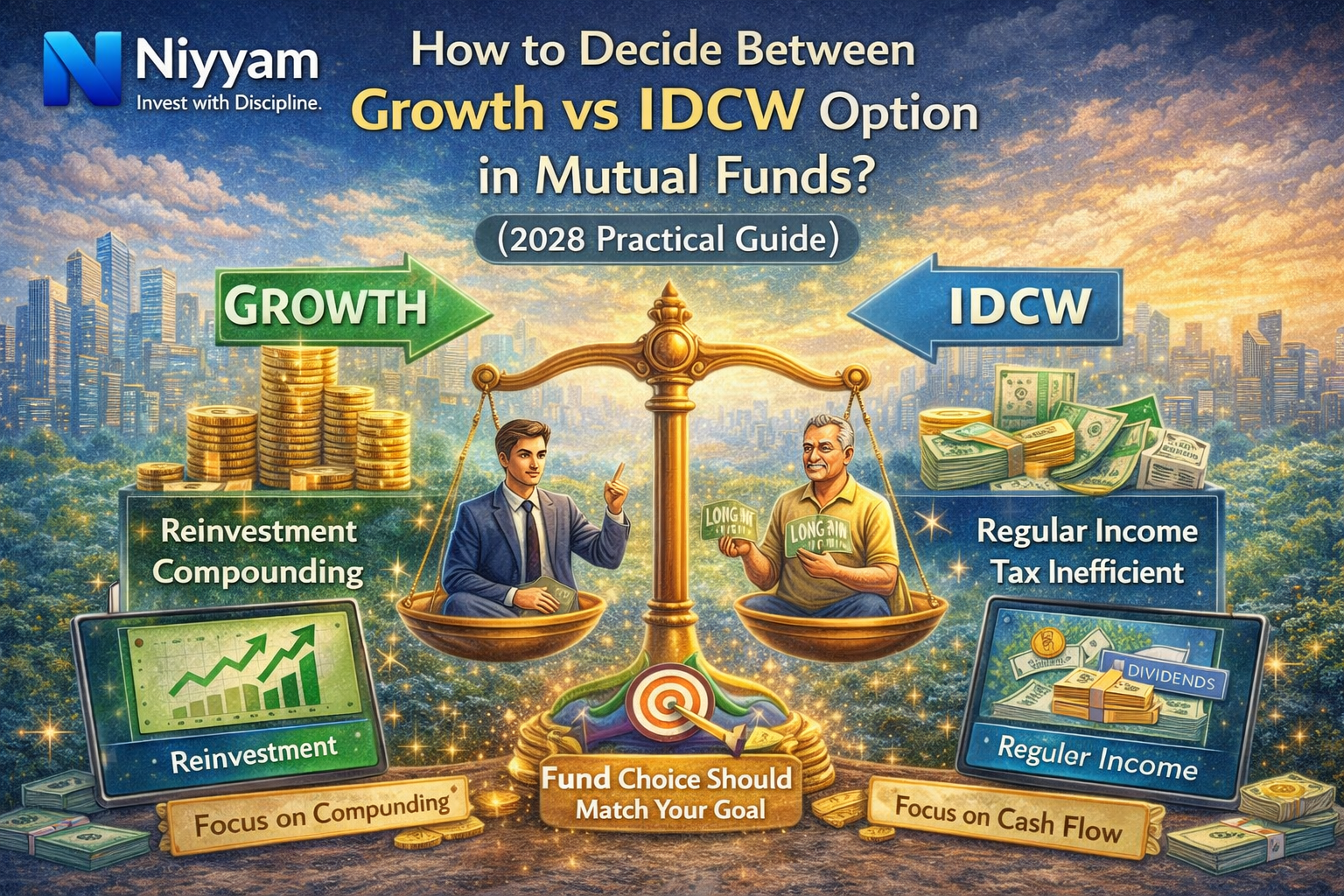
- “Growth vs IDCW Mutual Funds: Which Option is Better? (2026 Guide)”
- “How to Reduce Taxes on Mutual Fund Gains Legally (2026 Guide)”
- “How to Identify a Bad Mutual Fund? (2026 Guide)”
- “SWP in Mutual Funds Explained (2026 Guide)”
- “How SIP Builds Wealth Through Compounding (2026 Guide)”
Quick Rule of Thumb
- Switch for portfolio improvement
- Redeem for cash needs
- Avoid frequent actions
- Always consider tax before action
Conclusion
Switch vs redeem is not about choosing one over the other. It is about understanding the purpose behind your decision.
Both actions are useful when applied correctly. However, poor timing and lack of planning can reduce your returns significantly.
Final Verdict
Switch for strategy. Redeem for necessity. Always consider tax and timing.
Final Thought
Successful investing is not just about returns.
It is about making the right decisions at the right time.
Frequently Asked Questions (FAQs)
1. Is switching taxable?
Yes, it is treated as redemption and is taxable.
2. Is redeeming taxable?
Yes, based on capital gains.
3. Which is better?
Depends on your goal.
4. Can I avoid tax while switching?
No, tax applies.
5. When should I switch funds?
When your fund underperforms, or goals change.
Disclaimer
This content is for educational purposes only and does not constitute investment advice.
Mutual fund investments are subject to market risks. Investors should read all scheme-related documents carefully before investing and consider their financial goals, risk tolerance, and investment horizon.
Share this guide with your friends, family, and colleagues to help them make better financial decisions.
If this article helped you, share it with at least one person who needs this guidance.
Leave a Reply