
By Ashok Prasad, Founder, Niyyam
Published: April 2026
Introduction
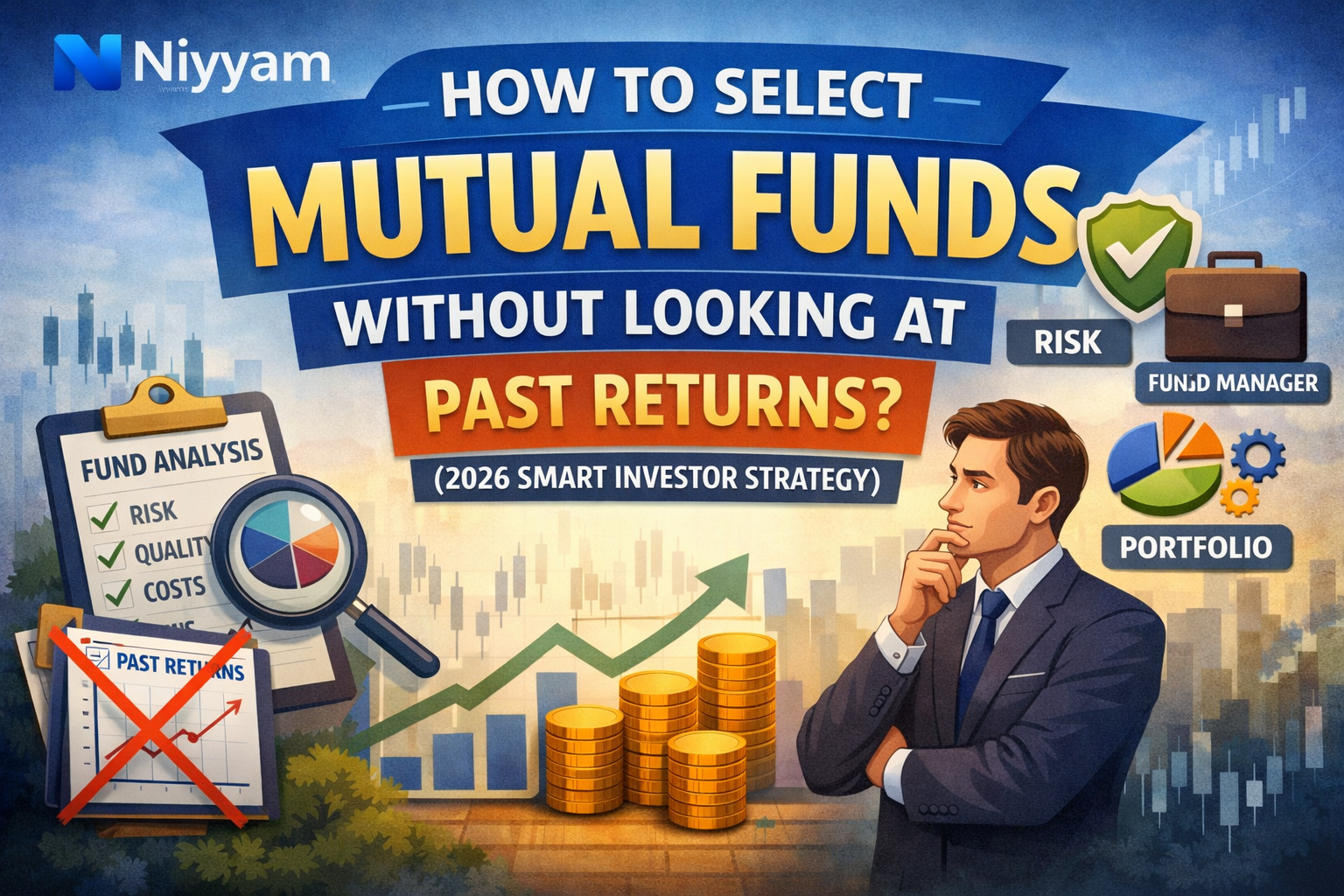
How to select mutual funds without looking at past returns is one of the most important skills investors must develop in 2026.
Many investors chase top-performing funds based on past returns, only to experience disappointing results later.
If you want to build a strong and future-ready portfolio, you need a smarter framework that goes beyond historical performance.
💡 Key Takeaways
- Past returns do not guarantee future performance
- Fund selection should focus on consistency and risk
- Fund manager and portfolio quality matter more than returns
- Expense ratio impacts long-term returns significantly
- Avoid chasing top-performing funds blindly
- Structured investing leads to better outcomes
Direct Answer
To select mutual funds without looking at past returns:
- Focus on the fund category and objective
- Evaluate consistency and risk metrics
- Check the fund manager’s experience
- Analyze portfolio quality and cost
Why Past Returns Can Mislead Investors
Table 1: Problem with Past Returns
| Issue | Explanation |
|---|---|
| Market cycles | Returns vary across cycles |
| Short-term spikes | Temporary outperformance |
| Regression effect | Returns normalize over time |
Most top-performing funds do not remain top performers consistently.
As per SEBI regulations, investors should focus on risk-adjusted performance instead of absolute returns.
What Matters More Than Returns
Table 2: Key Factors
| Factor | Importance |
|---|---|
| Fund category | Very High |
| Risk profile | High |
| Fund manager | High |
| Portfolio quality | Very High |
| Expense ratio | Medium |
Before selecting funds, understand categories using How to Decide Which Mutual Fund Category to Invest In (Large, Mid, Small, Hybrid, Debt)? (2026 Framework).
Step 1: Choose the Right Category
Table 3: Category Selection
| Goal | Category |
|---|---|
| Growth | Equity |
| Stability | Debt |
| Balance | Hybrid |
Category selection is more important than selecting individual funds.
Step 2: Check Consistency
Table 4: Consistency Metrics
| Metric | Purpose |
|---|---|
| Rolling returns | Stability |
| Drawdown | Downside control |
| Volatility | Risk level |
Step 3: Evaluate Fund Manager
Table 5: Fund Manager Evaluation
| Factor | Importance |
|---|---|
| Experience | Decision quality |
| Strategy | Predictability |
| Track record | Consistency |
Step 4: Analyze Portfolio Quality
Table 6: Portfolio Factors
| Factor | Importance |
|---|---|
| Diversification | Risk reduction |
| Stock quality | Stability |
| Sector allocation | Balance |
Step 5: Check Expense Ratio
Table 7: Expense Impact
| Expense | Effect |
|---|---|
| High | Reduces returns |
| Low | Improves compounding |
Real-Life Example
Table 8: Investor Comparison
| Investor | Strategy | Result |
|---|---|---|
| Investor A | Chased returns | Poor outcome |
| Investor B | Followed framework | Stable growth |
Common Mistakes Investors Make
Table 9: Mistakes vs Solutions
| Mistake | Solution |
|---|---|
| Picking top funds | Focus on process |
| Ignoring risk | Align profile |
| Frequent switching | Stay consistent |
| Over-diversification | Keep simple |
To improve timing decisions, refer to How to Decide Between SIP, STP, and Lump Sum in Different Market Conditions? (2026 Decision Framework).
Real-Life Insight
Most investors:
- Invest based on recent performance
- Panic during downturns
- Switch funds frequently
Successful investors:
- Focus on discipline
- Stay invested long-term
- Avoid emotional decisions
Advanced Strategy: Risk-Adjusted Selection
Table 10: Risk Metrics
| Metric | Meaning |
|---|---|
| Sharpe Ratio | Return per unit risk |
| Alpha | Excess return |
| Beta | Market sensitivity |
These provide better insights than raw returns.
Step-by-Step Fund Selection Framework
Table 11: Selection Process
| Step | Action |
|---|---|
| 1 | Choose category |
| 2 | Check consistency |
| 3 | Evaluate manager |
| 4 | Analyze portfolio |
| 5 | Review cost |
Case Study: Smart vs Emotional Investing
Table 12: Case Study
| Strategy | Outcome |
|---|---|
| Return chasing | Losses |
| Structured selection | Stable growth |
Key Learning
- Process matters more than performance
- Discipline improves results
When NOT to Select a Fund
Table 13: Avoid These Situations
| Situation | Risk |
|---|---|
| Trending funds | Overvaluation |
| Short-term data | Misleading |
| Lack of clarity | Poor decisions |
Scenario-Based Fund Selection
Table 14: Practical Scenarios
| Situation | Strategy |
|---|---|
| Beginner | Large Cap |
| Moderate | Hybrid |
| Aggressive | Mid + Small Cap |
Quick Rule of Thumb
Table 15: Simple Guide
| Factor | Priority |
|---|---|
| Category | First |
| Risk | Second |
| Returns | Last |
Best vs Worst Scenario
Table 16: Strategy Comparison
| Approach | Result |
|---|---|
| Return chasing | Poor performance |
| Structured approach | Consistent growth |
Case Study: Fund Selection Without Chasing Returns
Table 17: Real Investor Comparison
| Investor | Strategy | Result |
|---|---|---|
| Investor A | Top-performing fund | Underperformance |
| Investor B | Consistency focus | Stable returns |
| Investor C | Ignored risk | High volatility |
Key Observations
- Top-performing funds do not stay on top
- Consistency matters more than spikes
- Risk control improves outcomes
Practical Learning
- Avoid chasing short-term performance
- Focus on process and discipline
- Select funds aligned with goals
Advanced Strategy: Multi-Factor Selection Model
Table 18: Multi-Factor Framework
| Factor | Weight |
|---|---|
| Category fit | 30% |
| Risk metrics | 25% |
| Fund manager | 20% |
| Portfolio quality | 15% |
| Cost | 10% |
Using multiple factors reduces reliance on a single metric.
Final Decision Checklist
Table 19: Quick Checklist
| Question | Yes/No |
|---|---|
| Matches your goal? | ✔ |
| Risk acceptable? | ✔ |
| Consistent performance? | ✔ |
| Cost reasonable? | ✔ |
Frequently Asked Questions (FAQs)
1. Should I ignore past returns completely?
No, but they should not be the primary factor.
2. What is the most important factor?
Fund category and risk alignment.
3. How many funds should I invest in?
3–5 funds are sufficient.
4. Is the expense ratio important?
Yes, it impacts long-term returns significantly.
Final Verdict
Selecting mutual funds without relying on past returns is a smarter approach.
A disciplined investor:
- Focuses on process
- Aligns investments with goals
- Avoids emotional decisions
The key is structured investing, not performance chasing.
Disclaimer
This content is for educational purposes only and does not constitute investment advice.
Mutual fund investments are subject to market risks. Investors should read all scheme-related documents carefully before investing and consider their financial goals, risk tolerance, and investment horizon.
Share this guide with your friends, family, and colleagues to help them make better financial decisions.
If this article helped you, share it with at least one person who needs this guidance.
Leave a Reply