
By Ashok Prasad, Founder, Niyyam
Published: April 2026
Introduction
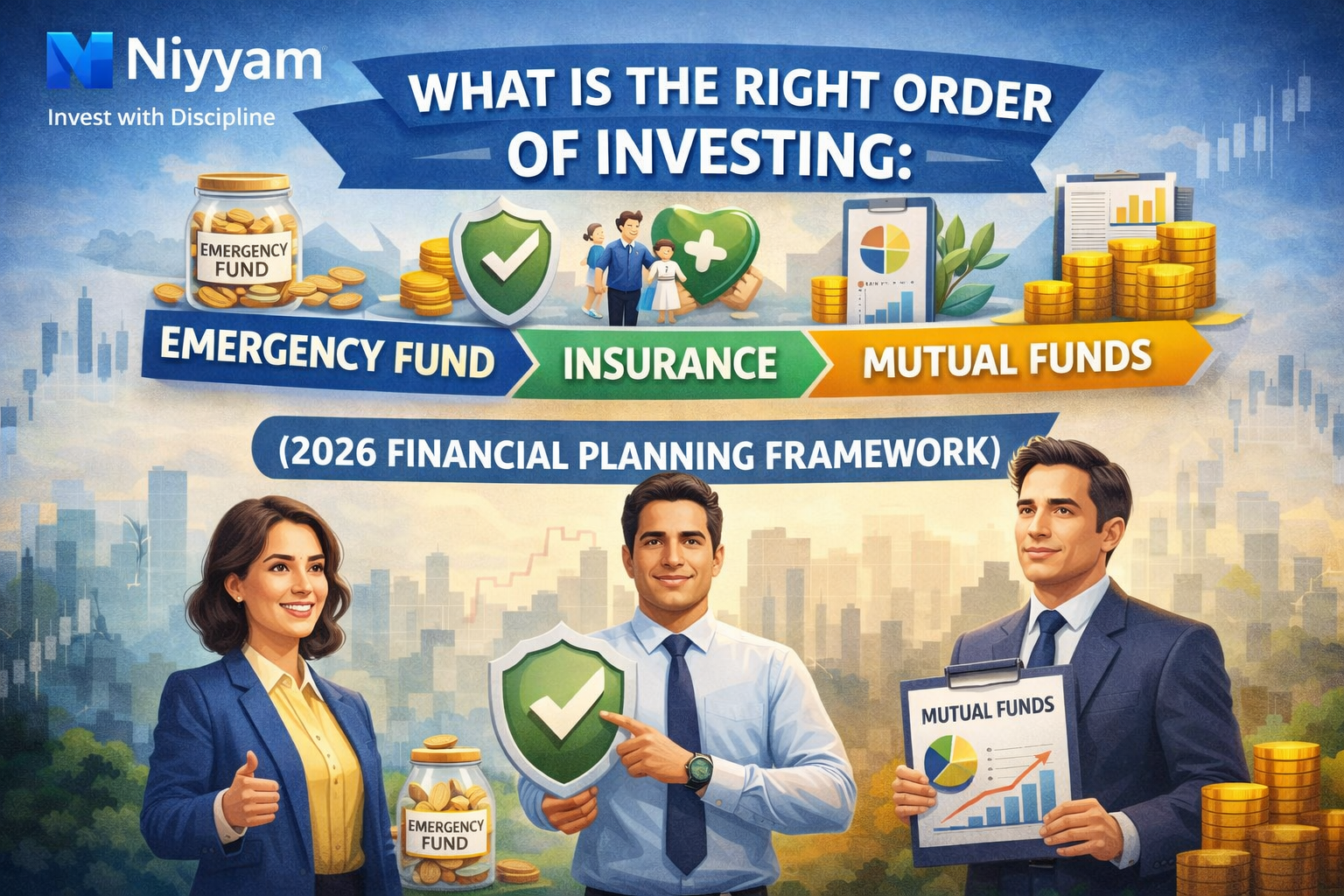
What is the right order of investing: emergency fund → insurance → mutual funds is one of the most important questions every investor must answer in 2026.
Many people start investing without building a strong financial foundation, which leads to financial stress, premature withdrawals, and poor long-term outcomes.
If you want to build wealth without instability, you must follow a structured financial planning framework.
💡 Key Takeaways
- Financial planning must follow a clear order
- An emergency fund is the priority
- Insurance protects your financial future
- Mutual funds come after financial stability
- Skipping steps increases financial risk
- Discipline ensures long-term wealth creation
Direct Answer
The correct order of investing is:
- Build an emergency fund first
- Get adequate insurance coverage
- Then start investing in mutual funds
Why Investment Order Matters
Table 1: Impact of Wrong Order
| Financial loss during a crisis | Consequence |
|---|---|
| Investing without emergency fund | Forced withdrawals |
| No insurance | Financial loss during crisis |
| Direct investing | High risk exposure |
A structured approach ensures both safety and growth.
Understanding the right order of investing emergency fund and insurance mutual funds helps investors build a strong financial foundation and avoid unnecessary risks.
As per SEBI regulations, investors should prioritize risk management before return generation.
As per SEBI regulations (https://www.sebi.gov.in), investors should prioritise risk management before return generation.
Step 1: Build an Emergency Fund
What is an Emergency Fund?
An emergency fund is money reserved for unexpected events such as:
- Job loss
- Medical emergencies
- Urgent expenses
Table 2: Emergency Fund Guidelines
| Factor | Recommendation |
|---|---|
| Amount | 3–6 months expenses |
| Storage | Liquid funds |
| Accessibility | High |
Where to Keep Emergency Funds?
Table 3: Best Options
| Option | Suitability |
|---|---|
| Savings account | Immediate access |
| Liquid funds | Better returns |
| Sweep FD | Moderate option |
If you have idle money, refer to What to Do With Idle Money in a Savings Account? Mutual Fund Strategy for 2026 Investors.
Step 2: Get Insurance Coverage
Why Insurance is Important
Insurance protects your financial plan from unexpected risks.
Table 4: Types of Insurance
| Type | Purpose |
|---|---|
| Term insurance | Income protection |
| Health insurance | Medical coverage |
| Personal accident | Disability protection |
Table 5: Insurance Coverage Guidelines
| Factor | Recommendation |
|---|---|
| Term cover | 10–15x income |
| Health cover | ₹5–10 lakh |
| Premium | Affordable |
Without insurance, one event can disrupt your financial journey.
Step 3: Start Mutual Fund Investments
Why Mutual Funds Come Last
Mutual funds are for wealth creation, not emergency handling.
According to AMFI (https://www.amfiindia.com), mutual funds are designed for long-term wealth creation.
Table 6: Role of Mutual Funds
| Purpose | Benefit |
|---|---|
| Wealth creation | Long-term growth |
| Goal-based investing | Structured planning |
| Diversification | Risk reduction |
Before investing, understand fund selection using How to Select Mutual Funds Without Looking at Past Returns? (2026 Smart Investor Strategy).
Complete Financial Planning Framework
Table 7: Investment Order
| Step | Priority |
|---|---|
| 1 | Emergency Fund |
| 2 | Insurance |
| 3 | Mutual Funds |
Real-Life Example
Table 8: Investor Comparison
| Investor | Approach | Outcome |
|---|---|---|
| Investor A | Direct investing | Financial stress |
| Investor B | Structured approach | Stability |
Common Mistakes Investors Make
Table 9: Mistakes vs Solutions
| Mistake | Solution |
|---|---|
| Skipping emergency fund | Build first |
| Ignoring insurance | Get coverage |
| Investing early | Follow sequence |
| No planning | Create structure |
Real-Life Insight
Most investors:
- Start investing without a safety net
- Ignore insurance
- Withdraw during emergencies
Successful investors:
- Build the foundation first
- Protect risks
- Invest consistently
Advanced Strategy: Layered Financial Planning
Table 10: Financial Layers
| Layer | Purpose |
|---|---|
| Safety | Emergency fund |
| Protection | Insurance |
| Growth | Investments |
Step-by-Step Action Plan
Table 11: Financial Planning Steps
| Step | Action |
|---|---|
| 1 | Calculate expenses |
| 2 | Build emergency fund |
| 3 | Buy insurance |
| 4 | Start investing |
| 5 | Review regularly |
Case Study: Structured vs Unstructured Investing
Table 12: Case Study
| Strategy | Result |
|---|---|
| No structure | Instability |
| Structured plan | Wealth creation |
Key Learning
- Planning reduces risk
- Structure improves outcomes
When NOT to Start Investing
Table 13: Avoid These Situations
| Situation | Risk |
|---|---|
| No emergency fund | Withdrawal risk |
| No insurance | Financial loss |
| High debt | Cash flow issues |
Scenario-Based Planning
Table 14: Practical Scenarios
| Situation | Strategy |
|---|---|
| Salaried | Fund + SIP |
| Business owner | Higher reserve |
| Beginner | Start basics |
Quick Rule of Thumb
Table 15: Simple Framework
| Stage | Action |
|---|---|
| Stage 1 | Save |
| Stage 2 | Protect |
| Stage 3 | Invest |
Best vs Worst Scenario
Table 16: Comparison
| Approach | Result |
|---|---|
| Random investing | Stress |
| Structured planning | Stability |
Advanced Insight: Financial Discipline
Following the correct order:
- Prevents emotional decisions
- Ensures stability
- Improves long-term consistency
Case Study: Why Following the Right Investment Order Matters
Table 17: Investor Comparison
| Investor | Approach | Result |
|---|---|---|
| Investor A | No emergency fund | Forced withdrawal |
| Investor B | Insurance first | Protected |
| Investor C | Full framework | Stable growth |
Key Observations
- Skipping steps increases risk
- Proper order ensures stability
Advanced Strategy: Income-Based Planning
Table 18: Income-Based Allocation
| Income Level | Strategy |
|---|---|
| Low | Focus safety |
| Middle | Balanced |
| High | Aggressive growth |
Long-Term Wealth Framework
Table 19: Wealth Phases
| Phase | Focus |
|---|---|
| Phase 1 | Safety |
| Phase 2 | Protection |
| Phase 3 | Growth |
Final Checklist Before Investing
Table 20: Checklist
| Question | Yes/No |
|---|---|
| Emergency fund ready? | ✔ |
| Insurance in place? | ✔ |
| Goals defined? | ✔ |
| Ready to invest? | ✔ |
Frequently Asked Questions (FAQs)
1. Can I invest without an emergency fund?
Not recommended, as emergencies may force withdrawals.
2. Is insurance necessary before investing?
Yes, it protects your financial plan.
3. How much emergency fund is required?
Typically, 3–6 months of expenses.
4. When should I start investing?
After building an emergency fund and insurance.
Final Verdict
The right order of investing is simple but powerful. Following the right order of investing emergency fund, insurance mutual funds ensure stability, protection, and long-term wealth creation.
A disciplined investor:
- Builds safety first
- Protects risks second
- Invests for growth third
Following this framework ensures long-term financial success.
Disclaimer
This content is for educational purposes only and does not constitute investment advice.
Mutual fund investments are subject to market risks. Investors should read all scheme-related documents carefully before investing and consider their financial goals, risk tolerance, and investment horizon.
Share this guide with your friends, family, and colleagues to help them make better financial decisions.
If this article helped you, share it with at least one person who needs this guidance.
Leave a Reply