

By Ashok Prasad, Founder, Niyyam
Published: March 2026
Introduction: The Biggest Confusion in SIP Investing
Most investors understand that SIP is one of the best ways to build long-term wealth. But when it comes to deciding where to invest that SIP, confusion begins.
Questions like:
- Should I invest only in large-cap funds?
- Are mid-cap funds better for higher returns?
- Are small-cap funds too risky?
Because of this confusion, many investors either:
- Over-invest in risky funds
- Under-invest in growth opportunities
- Or create over-diversified portfolios
The reality is simple:
Your returns depend more on allocation than on choosing the “best fund.”
💡 Key Takeaways
- Large-cap funds provide stability and lower volatility
- Mid-cap funds offer balanced growth potential
- Small-cap funds deliver high returns but with higher risk
- Ideal allocation depends on your risk profile and time horizon
- Avoid overexposure to small-cap funds
- Simple portfolios often outperform complex ones
- Rebalancing is essential to maintain allocation discipline
Direct Answer
An ideal SIP allocation for most investors in 2026 is 50–60% large cap, 20–30% mid cap, and 10–20% small cap. This balance provides stability, growth, and risk management for long-term wealth creation.
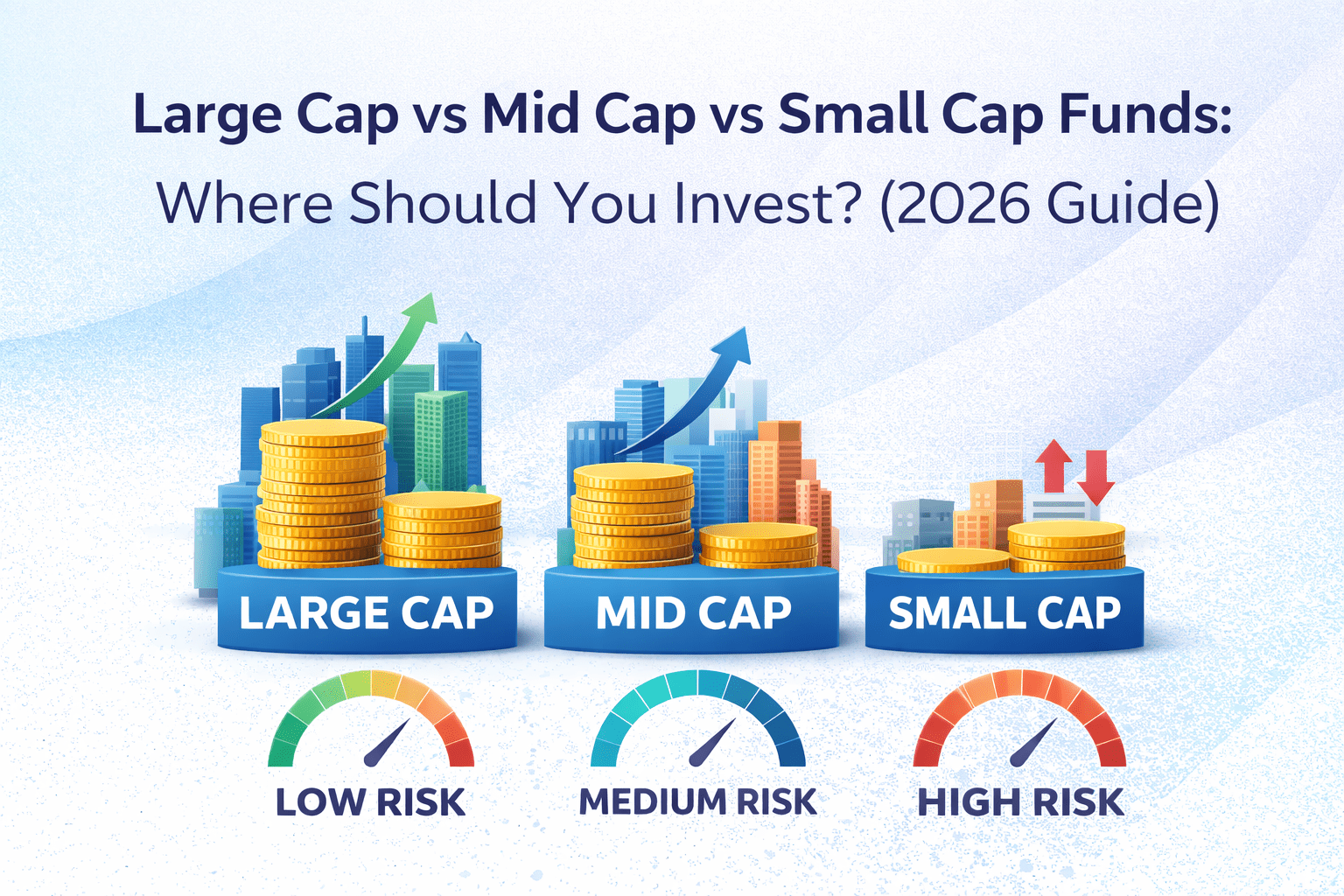
Understanding Large, Mid, and Small Cap Funds
Large Cap Funds
| Feature | Details |
|---|---|
| Companies | Top 100 |
| Risk | Low |
| Returns | Stable |
| Volatility | Low |
Best suited for stability and consistent performance
Mid Cap Funds
| Feature | Details |
|---|---|
| Companies | 101–250 |
| Risk | Moderate |
| Returns | Higher than large cap |
| Volatility | Medium |
Best suited for balanced growth
Small Cap Funds
| Feature | Details |
|---|---|
| Companies | Beyond top 250 |
| Risk | High |
| Returns | Very high potential |
| Volatility | High |
Best suited for long-term aggressive investors
For a deeper understanding, you can also explore Large Cap vs Mid Cap vs Small Cap Funds: Where Should You Invest? (2026 Guide).
Why Allocation Matters More Than Fund Selection
Most investors focus on selecting “top-performing funds” but ignore allocation.
Comparison
| Investor A | Investor B |
|---|---|
| Best funds | Average funds |
| Poor allocation | Balanced allocation |
| Lower returns | Higher returns |
Correct allocation controls both risk and returns.
Ideal SIP Allocation Based on Risk Profile
Conservative Investors
| Category | Allocation |
|---|---|
| Large Cap | 70% |
| Mid Cap | 20% |
| Small Cap | 10% |
Moderate Investors
| Category | Allocation |
|---|---|
| Large Cap | 50–60% |
| Mid Cap | 25–30% |
| Small Cap | 10–20% |
Aggressive Investors
| Category | Allocation |
|---|---|
| Large Cap | 30–40% |
| Mid Cap | 30–40% |
| Small Cap | 20–30% |
If you are unsure about your risk profile, you can also go through How to Select Mutual Funds Based on Risk Profile in India (2026 Guide).
New Section: Best SIP Allocation by Age
Your age plays a major role in allocation.
Allocation by Age Group
| Age Group | Large Cap | Mid Cap | Small Cap |
|---|---|---|---|
| 20–30 | 40% | 30% | 30% |
| 30–40 | 50% | 30% | 20% |
| 40–50 | 60% | 25% | 15% |
| 50+ | 70% | 20% | 10% |
As age increases, risk should reduce.
Quick Rule of Thumb
- Beginners → Focus on large-cap
- Moderate investors → Balanced mix
- Experienced investors → Add small-cap
Example SIP Allocation (₹5K, ₹10K, ₹25K)
₹5,000 SIP
| Category | Allocation | Amount |
|---|---|---|
| Large Cap | 60% | ₹3,000 |
| Mid Cap | 25% | ₹1,250 |
| Small Cap | 15% | ₹750 |
₹10,000 SIP
| Category | Allocation | Amount |
|---|---|---|
| Large Cap | 60% | ₹6,000 |
| Mid Cap | 25% | ₹2,500 |
| Small Cap | 15% | ₹1,500 |
₹25,000 SIP
| Category | Allocation | Amount |
|---|---|---|
| Large Cap | 50% | ₹12,500 |
| Mid Cap | 30% | ₹7,500 |
| Small Cap | 20% | ₹5,000 |
What Happens If You Over-Allocate to small-cap stocks?
Risk Scenario
| Issue | Impact |
|---|---|
| High volatility | Portfolio swings |
| Sharp drawdowns | Panic selling |
| Emotional stress | Poor decisions |
Small caps should be limited, not dominant.
Common Mistakes Investors Make
1. Too Much Small Cap Exposure
Leads to volatility
2. Ignoring Large Cap
Reduces stability
3. Too Many Funds
Creates confusion
If you want to understand this better, you can also explore Should You Invest in Too Many Mutual Funds? (2026 Guide).
How Many Funds Should You Have?
| Portfolio Type | Number of Funds |
|---|---|
| Simple | 2–3 |
| Balanced | 3–4 |
| Complex | 5+ (avoid) |
You can also go through How Many SIPs Should You Run at the Same Time? (2026 Guide).
Importance of Rebalancing
Over time, allocations change due to market movements.
Example
| Category | Initial | After Growth |
|---|---|---|
| Large Cap | 60% | 50% |
| Mid Cap | 25% | 30% |
| Small Cap | 15% | 20% |
Rebalancing ensures your risk remains controlled.
For a detailed understanding, you can explore How to Rebalance Your Mutual Fund Portfolio (2026 Guide).
Advanced Insight: Core and Satellite Strategy
Structure
| Type | Allocation |
|---|---|
| Core (Large Cap) | 60–70% |
| Satellite (Mid + Small) | 30–40% |
Benefits
- Stability + Growth
- Lower risk
- Better returns consistency
When Should You Change Allocation?
| Situation | Action |
|---|---|
| Age increases | Reduce risk |
| Income grows | Increase SIP |
| Market crash | Add more |
| Market peak | Reduce risk |
Allocation vs Market Timing
| Factor | Allocation | Timing |
|---|---|---|
| Control | High | Low |
| Predictability | High | Low |
| Success rate | High | Low |
Allocation wins over timing in the long run.
Conclusion: Build a Balanced Portfolio
- Do not chase returns blindly
- Do not ignore risk
- Do not overcomplicate
Final Action Plan
- Identify your risk profile
- Allocate SIP accordingly
- Keep portfolio simple
- Rebalance regularly
Final Verdict
A well-balanced SIP allocation is the foundation of wealth creation.
- Large cap = Stability
- Mid-cap = Growth
- Small cap = Acceleration
Final Thought
Wealth is not created by chasing returns.
- It is created by managing risk and staying consistent
Disclaimer
This content is for educational purposes only and does not constitute investment advice.
Mutual fund investments are subject to market risks. Investors should read all scheme-related documents carefully before investing and consider their financial goals, risk tolerance, and investment horizon.
Share this guide with your friends, family, and colleagues to help them make better financial decisions.
If this article helped you, share it with at least one person who needs this guidance.
Leave a Reply