

By Ashok Prasad, Founder, Niyyam
Published: March 2026
Introduction
When most people begin investing in mutual funds, the first question they ask is:
“Which fund should I invest in?”
But experienced investors think differently.
They ask:
“How should I build my portfolio?”
Because the reality is simple:
Wealth is not created by one fund. It is created by a well-structured portfolio.
Many beginners:
- Invest in multiple funds without a plan
- Follow tips from friends or social media
- End up with overlapping and confusing investments
The result is often disappointing:
- Inconsistent returns
- Unnecessary risk
- Lack of clarity
This guide will help you understand how to build a simple, effective, and long-term mutual fund portfolio.
What is a Mutual Fund Portfolio?
A mutual fund portfolio is a combination of different mutual funds that you invest in to achieve your financial goals.
Instead of putting all your money into a single fund, you distribute your investments across:
- Different categories
- Different risk levels
- Different growth opportunities
This approach helps in reducing risk while improving consistency.
Why Portfolio Building Matters
Consider two investors:
Investor A (No Strategy)
- Invests in 6–7 random funds
- No clear allocation
- Repeats similar types of funds
Outcome:
- Portfolio overlap
- Difficult to track
- No clear direction
Investor B (Structured Portfolio)
- Chooses funds based on categories
- Maintains allocation discipline
Outcome:
- Balanced growth
- Better risk control
- Clarity in decision-making
The difference is not the fund selection alone — it is the structure behind it.
Step 1: Define Your Investment Goal
Before selecting any fund, you need clarity on your purpose.
Ask yourself:
- What am I investing for?
- What is my time horizon?
- How much risk can I handle?
Common Goals
- Long-term wealth creation
- Retirement planning
- Buying a house
- Children’s education
Your goal determines your portfolio structure.
Step 2: Decide Your Asset Allocation
Asset allocation is the foundation of your portfolio.
A simple and effective allocation for beginners can be:
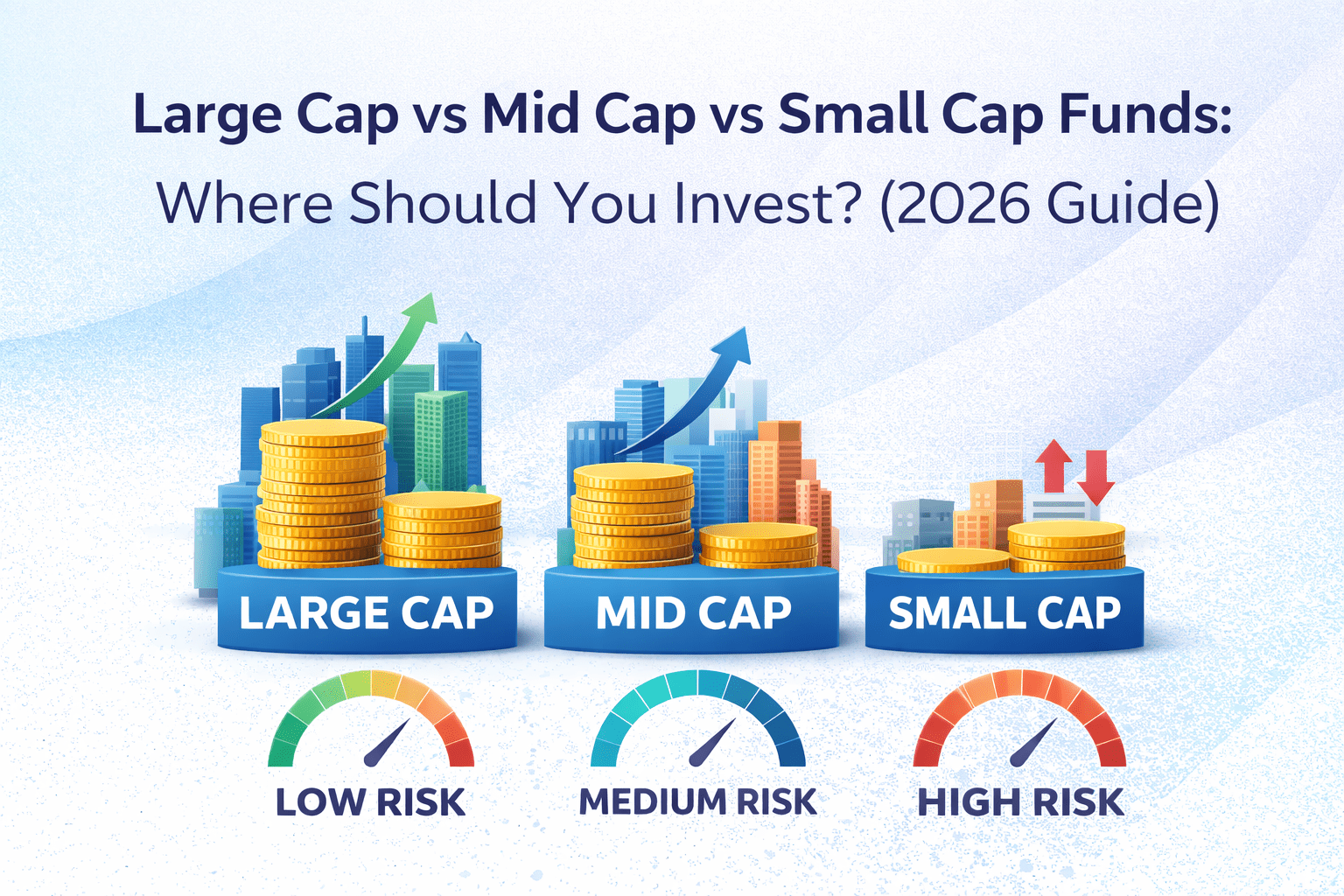
- Large Cap Funds: 40%
- Flexi Cap Funds: 30%
- Mid Cap Funds: 20%
- Small Cap Funds: 10%
This allocation provides:
- Stability from large-cap funds
- Growth from mid and small caps
- Flexibility from flexi-cap funds
If you want a deeper understanding of these categories, refer to
Large Cap vs Mid Cap vs Small Cap Funds: Where Should You Invest? (2026 Guide)
Step 3: Select the Right Funds
Once allocation is decided, the next step is fund selection.
Ideal Number of Funds
A well-structured portfolio typically includes:
- 3 to 5 funds in total
Example Portfolio
- One Large Cap Fund
- One Flexi Cap Fund
- One Mid Cap Fund
- One Small Cap Fund (optional)
Avoid adding too many funds, as it leads to duplication and complexity.
If you are unsure how to evaluate and select funds, you can read
How to Choose the Right Mutual Fund
Step 4: Invest Through SIP
Rather than investing a lump sum amount, a systematic approach works better.
A Systematic Investment Plan (SIP) allows you to invest regularly and build discipline.
Why SIP is Effective
- Reduces market timing risk
- Averages the purchase cost
- Encourages consistent investing
If you want to understand how SIP builds wealth over time, refer to
How SIP Builds Wealth Through Compounding (With Simple Examples)
Step 5: Stay Consistent
Consistency plays a crucial role in wealth creation.
Many investors start strong but lose discipline when markets fluctuate.
Common Behaviour
- Start SIP during good market conditions
- Stop investing during downturns
This approach breaks the power of compounding.
Long-term success depends on staying invested, not timing the market.
Step 6: Review Your Portfolio Periodically
Monitoring your portfolio is important, but over-monitoring can be harmful.
Ideal Review Frequency
- Once or twice a year
During review, check:
- Fund performance consistency
- Allocation balance
- Any major structural changes
Avoid frequent buying and selling, as it affects long-term returns.
Step 7: Increase Investment Over Time
As your income grows, your investments should also grow.
Example
If you increase your SIP by even 10% annually:
- Your long-term returns can increase significantly
- You benefit more from compounding
This is one of the most underrated strategies in wealth creation.
Common Portfolio Mistakes to Avoid
1. Too Many Funds
Holding too many funds leads to overlap and confusion.
2. Following Trends
Investing based on hype or recent performance is risky.
3. Ignoring Asset Allocation
Improper allocation can increase risk unnecessarily.
4. Frequent Switching
Changing funds frequently disrupts compounding.
Real-Life Example
Let’s consider a monthly SIP of ₹15,000:
- ₹6,000 in Large Cap
- ₹4,500 in Flexi Cap
- ₹3,000 in Mid Cap
- ₹1,500 in Small Cap
Over a period of 10–15 years:
- The portfolio grows steadily
- Risk is balanced
- Returns are optimized
Practical Approach for Beginners
If you are starting today, keep it simple:
Step 1
Start with:
- One Large Cap or Index Fund
- One Flexi Cap Fund
Step 2
After gaining confidence:
- Add one Mid Cap Fund
Step 3
Add Small Cap Fund only if:
- You understand the risk
- You have a long-term horizon
Step 4
Stay invested for at least 5–10 years
Conclusion
Building a mutual fund portfolio is not complicated.
It requires:
- Clear goals
- Proper allocation
- Consistent investing
You do not need complex strategies or too many funds.
A simple, well-structured portfolio is enough to build long-term wealth.
Soft CTA
If you want to build a mutual fund portfolio with clarity and discipline, having the right structure makes all the difference.
Niyyam is designed to simplify investing and help you stay consistent with your financial goals.
Start your wealth creation journey with confidence.
Disclaimer
Mutual fund investments are subject to market risks. Please read all scheme-related documents carefully before investing.
Share this guide with your friends, family, and colleagues to help them make better financial decisions.
If this article helped you, share it with at least one person who needs this guidance.
Leave a Reply