

By Ashok Prasad, Founder, Niyyam
Published: March 2026
Investing a lump sum like ₹1 lakh can feel like an important financial step.
But many investors struggle with one question:
“Where should I invest ₹1 lakh to get the best returns?”
The answer is not about finding one perfect fund.
It is about building the right allocation strategy based on your goals, risk profile, and time horizon.
In this guide, you will learn:
- How to allocate ₹1 lakh effectively
- Which mutual fund categories to choose from?
- A practical 2026 investment strategy
- Common mistakes to avoid
💡 Key Takeaways
- Avoid All-at-Once: Instead of a single lump sum, consider using an STP (Systematic Transfer Plan) to move money from a Liquid fund to Equity over 6-12 months.
- Core & Satellite: Keep 60-70% in stable “Core” funds (Large-cap/Index) and 30% in “Satellite” funds (Mid/Small-cap) for extra growth.
- Emergency Buffer: Ensure you already have 6 months of expenses in a savings account before committing a full ₹1 Lakh to market-linked funds.
- Goal Alignment: Divide the ₹1 Lakh based on when you need the money; shorter goals need safer funds, while 10-year goals can handle more equity.
First Rule: There is No “One Best Fund”
Before anything else, understand this clearly:
There is no single mutual fund that is best for everyone.
Your strategy should depend on:
- Investment duration
- Risk tolerance
- Financial goals
- Market conditions
Step 1: Define Your Investment Horizon
Your time horizon decides your allocation.
Short Term (0–3 Years)
- Focus on capital protection
- Avoid high equity exposure
Suitable options:
- Debt funds
- Liquid funds
Medium Term (3–5 Years)
- Balance between growth and stability
Suitable options:
- Hybrid funds
- Large-cap funds
Long Term (5+ Years)
- Focus on wealth creation
Suitable options:
- Equity funds
- Index funds
- Mid-cap funds
Step 2: Lump Sum vs SIP Strategy
You can invest ₹1 lakh in two ways.
Lump Sum
- Invest the entire amount at once
- Suitable when markets are stable
SIP
- Invest gradually over time
- Reduces timing risk
Recommended Approach
- Invest 30%–40% as a lump sum
- Invest the remaining through SIP over 3–6 months
Refer:
How SIP Builds Wealth Through Compounding (With Simple Examples)
Step 3: Ideal Allocation Strategy
Moderate Investor Example
- ₹40,000 → Large Cap Fund
- ₹30,000 → Index Fund
- ₹20,000 → Mid Cap Fund
- ₹10,000 → Debt Fund
Why This Works
- Large cap provides stability
- An index fund ensures low-cost exposure
- Mid-cap adds growth potential
- Debt reduces volatility
Quick Allocation Visual Rule of Thumb
This simple rule makes decision-making easier.
Conservative Investors
- 30% Equity
- 70% Debt
Focus: Capital protection and stability
Moderate Investors
- 60% Equity
- 40% Debt
Focus: Balanced growth and risk control
Aggressive Investors
- 75%–80% Equity
- 20%–25% Debt
Focus: Maximum long-term wealth creation
Core Principle:
- Higher equity allocation leads to better inflation-beating potential
- Allocation must match your risk tolerance
Step 4: Choose the Right Fund Categories
Large Cap Funds
- Stable
- Lower risk
- Suitable as a core portfolio
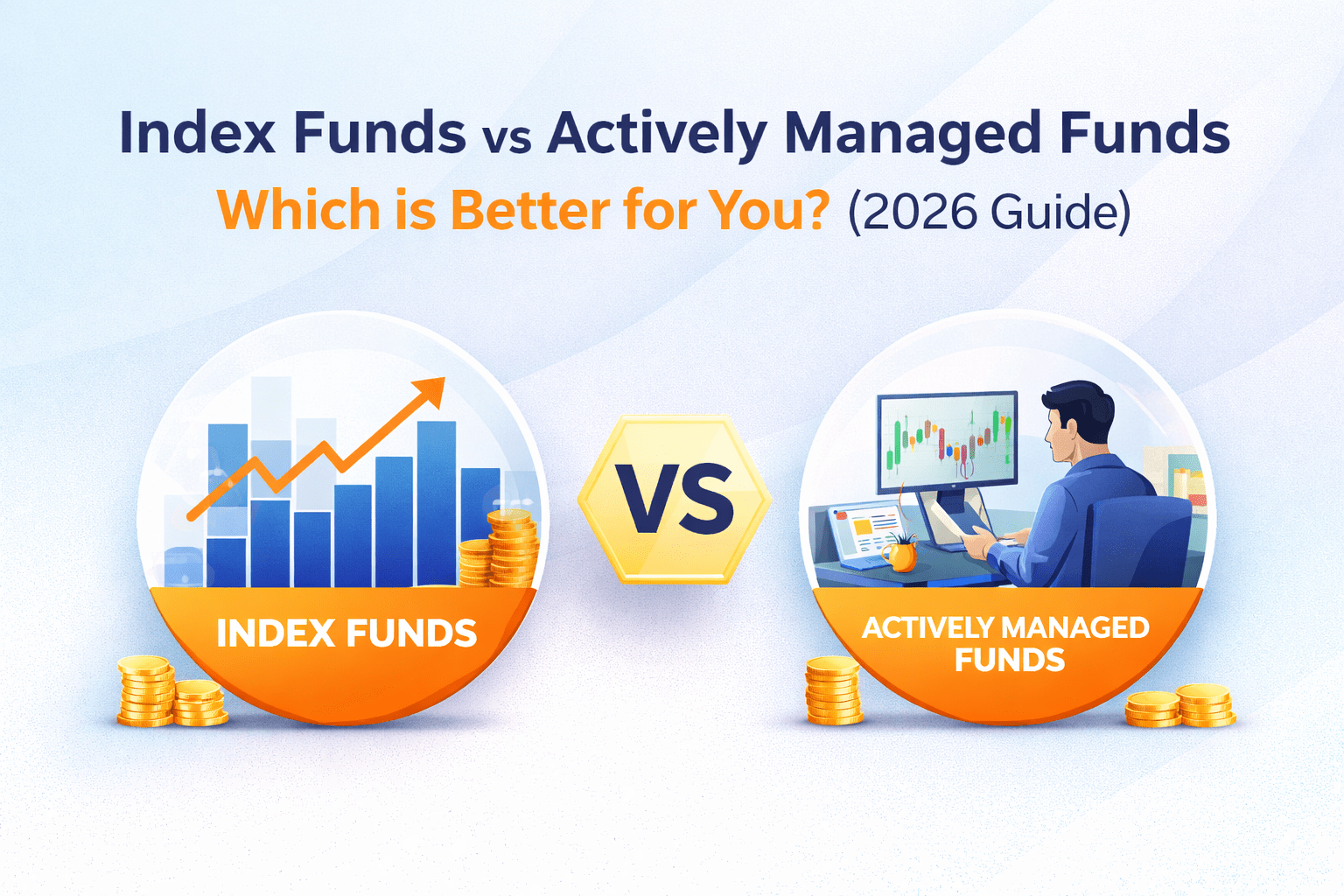
Index Funds (Passive Funds)
- Low cost
- Market-linked returns
- Ideal for long-term investors
Refer:
Active vs Passive Investing in India: Which Strategy Wins in the Long Run? (2026 Guide)
Mid Cap Funds
- Higher growth potential
- Higher volatility
- Suitable for long-term investors
Debt Funds
- Stability
- Lower risk
- Useful for diversification
To understand categories better, refer to:
Types of Mutual Funds in India: Equity, Debt, and Hybrid Explained
Step 5: Consider Inflation Impact
Your returns must beat inflation.
If inflation is 6%:
- Returns below 6% mean no real wealth creation
Refer:
How Inflation Impacts Your Mutual Fund Returns (And How to Beat It in 2026)
Key Insight:
- Equity investments are essential for real wealth growth
Step 6: Expense Ratio Matters
Costs directly affect your returns.
- Higher cost reduces net gains
- Lower cost improves long-term compounding
Refer:
What is Expense Ratio in Mutual Funds? How It Affects Your Returns (2026 Guide)
Step 7: Diversification Strategy
Avoid concentrating your entire investment.
Ideal Approach
- Invest across 2–4 funds
- Maintain category balance
Important Point:
- Over-diversification reduces returns
- Under-diversification increases risk
Step 8: Avoid Market Timing
Trying to time the market often leads to mistakes.
Common Investor Behavior
- Waiting for a market crash
- Delaying investment decisions
Reality
- Perfect timing is nearly impossible
- Delays reduce compounding benefits
Better approach:
- Invest gradually
- Stay disciplined
Step 9: Stay Invested for Long-Term
Wealth is created through:
- Time
- Discipline
- Compounding
Short-term volatility is normal.
Long-term investing reduces risk.
Mini Case Study: ₹1 Lakh Investment Over Time
Let’s compare two investors.
Investor A (No Strategy)
- Invests ₹1 lakh randomly
- Average return: 8%
After 10 years:
- Value ≈ ₹2.16 lakh
Investor B (Structured Allocation)
- Follows balanced allocation
- Invests in an equity-heavy portfolio
- Average return: 12%
After 10 years:
- Value ≈ ₹3.10 lakh
Difference
- Investor B earns nearly ₹1 lakh more
Key Insight:
- Small return difference creates massive long-term impact
- Strategy matters more than the amount invested
Sample Portfolio for ₹1 Lakh (2026 Strategy)
Conservative Investor
- ₹30,000 → Large Cap Fund
- ₹20,000 → Index Fund
- ₹50,000 → Debt Fund
Moderate Investor
- ₹40,000 → Large Cap Fund
- ₹30,000 → Index Fund
- ₹20,000 → Mid Cap Fund
- ₹10,000 → Debt Fund
Aggressive Investor
- ₹30,000 → Index Fund
- ₹30,000 → Mid Cap Fund
- ₹20,000 → Small Cap Fund
- ₹20,000 → Large Cap Fund
Common Mistakes to Avoid
Investing in Too Many Funds
- Leads to confusion
- Reduces efficiency
Chasing Past Returns
- Past performance does not guarantee future results
Ignoring Asset Allocation
- Allocation matters more than fund selection
Investing Without a Clear Goal
- Leads to poor decisions
Exiting Too Early
- Short-term volatility should not trigger exits
Refer:
When to Exit a Mutual Fund? 7 Clear Signals Every Investor Should Know (2026 Guide)
Real-Life Perspective
Two investors with the same ₹1 lakh:
- One invests randomly
- One follows a structured allocation
After years:
- One struggles with inconsistent returns
- One builds stable wealth
Difference is not capital.
The difference is clarity and discipline.
Key Takeaways
- There is no single best mutual fund
- Asset allocation is more important than fund selection
- Equity is essential for long-term growth
- Diversification reduces risk
- Costs impact long-term returns
- Consistency is the most important factor
Final Thought
₹1 lakh is not just an investment.
It is the starting point of your wealth-building journey.
The objective is simple:
Make your money grow consistently and efficiently over time.
Frequently Asked Questions (FAQs)
1. Is ₹1 lakh enough to start investing?
Yes. It is a strong starting point.
2. Should I invest a lump sum or SIP?
A combination approach works best.
3. How many funds should I choose?
Ideally, 2 to 4 funds.
4. Can mutual funds lose money?
Yes, in the short term. Long-term investing reduces risk.
Disclaimer
This content is for educational purposes only and does not constitute investment advice.
Mutual fund investments are subject to market risks. Investors should read all scheme-related documents carefully before investing and consider their financial goals, risk tolerance, and investment horizon.
Share this guide with your friends, family, and colleagues to help them make better financial decisions.
If this article helped you, share it with at least one person who needs this guidance.
Leave a Reply