
By Ashok Prasad, Founder, Niyyam
Published: March 2026
Most investors invest in mutual funds without ever reading a fact sheet.
They rely on:
- Past returns
- Recommendations
- App rankings
This approach may work temporarily, but it often leads to poor decisions in the long run.
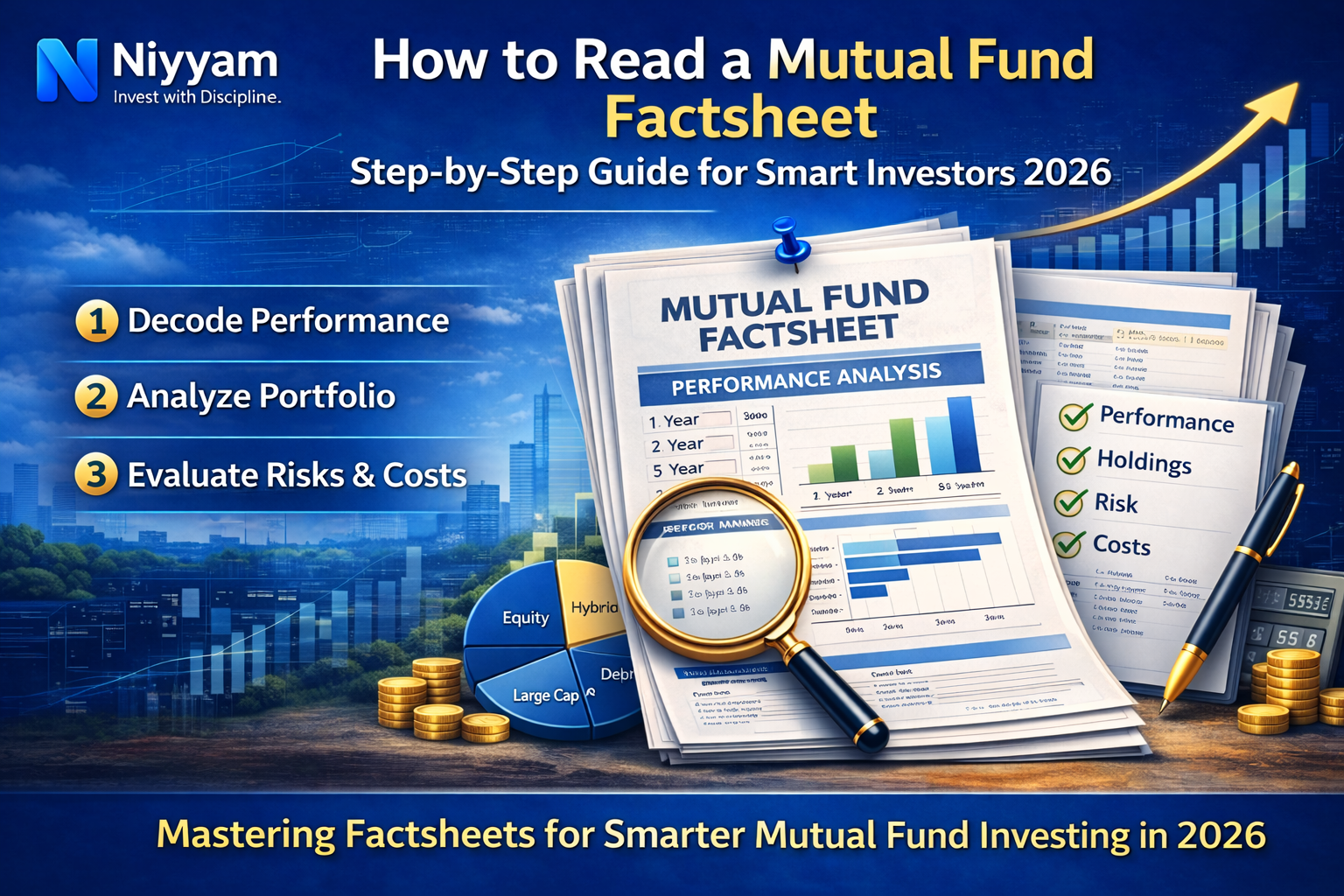
A mutual fund factsheet is not just a document — it is a complete health report of your investment. If you understand how to read it properly, you can make informed, confident, and disciplined investment decisions.
💡 Key Takeaways
- A Factsheet is a Fund’s Report Card: It provides insights into performance, risk, portfolio, and strategy.
- Returns Alone Are Misleading: Always evaluate risk and consistency along with returns.
- Portfolio Matters More Than Performance: What the fund invests in determines future returns.
- Benchmark Comparison is Essential: A fund must consistently outperform its benchmark.
- Use Factsheets for Decision-Making, Not Just Information: Smart investors actively use factsheets to review and adjust their portfolios.
What is a Mutual Fund Factsheet?
A mutual fund fact sheet is a monthly report released by fund houses.
It contains:
- Fund performance data
- Portfolio holdings
- Risk indicators
- Expense ratio
- Fund manager details
Important Insight:
- Investing without reading a factsheet is like buying a product without checking its specifications
Refer:
What is a Mutual Fund? A Simple Explanation for Beginners
Why Reading a Factsheet is Important
Most investors chase returns, but markets are unpredictable.
Factsheets help you:
- Understand risk exposure
- Identify concentration risks
- Avoid poor fund selection
Key Insight:
- Factsheets help you avoid mistakes before they happen
Refer:
How to Compare Mutual Funds in India (5 Key Metrics Every Investor Must Check)
Step-by-Step Guide to Reading a Mutual Fund Factsheet
Step 1: Fund Overview
This section includes:
- Fund category
- Investment objective
What to Check:
- Does the fund match your financial goal?
- Is the category suitable for your risk level?
Important Insight:
- A mismatch in category leads to poor investment outcomes
Refer:
Types of Mutual Funds in India: Equity, Debt, and Hybrid Explained
Step 2: Performance Analysis
Factsheets show returns across time periods.
Focus On:
- 3-year and 5-year returns
- Consistency across cycles
Avoid:
- Selecting based on 1-year returns
Key Insight:
- Short-term performance is often misleading
Refer:
What are Rolling Returns in Mutual Funds? Why It Matters More Than CAGR (2026 Guide)
Step 3: Benchmark Comparison
Every fund compares itself to a benchmark index.
What to Check:
- Is the fund consistently outperforming?
- Or just matching the index?
Important Insight:
- If a fund cannot beat its benchmark, reconsider its relevance
Step 4: Portfolio Holdings
This section reveals the actual investments.
Analyze:
- Top holdings
- Sector exposure
- Diversification
For example, if a fund is heavily invested in one sector, it carries a higher risk.
Key Insight:
- Portfolio composition determines future performance, not past returns
Refer:
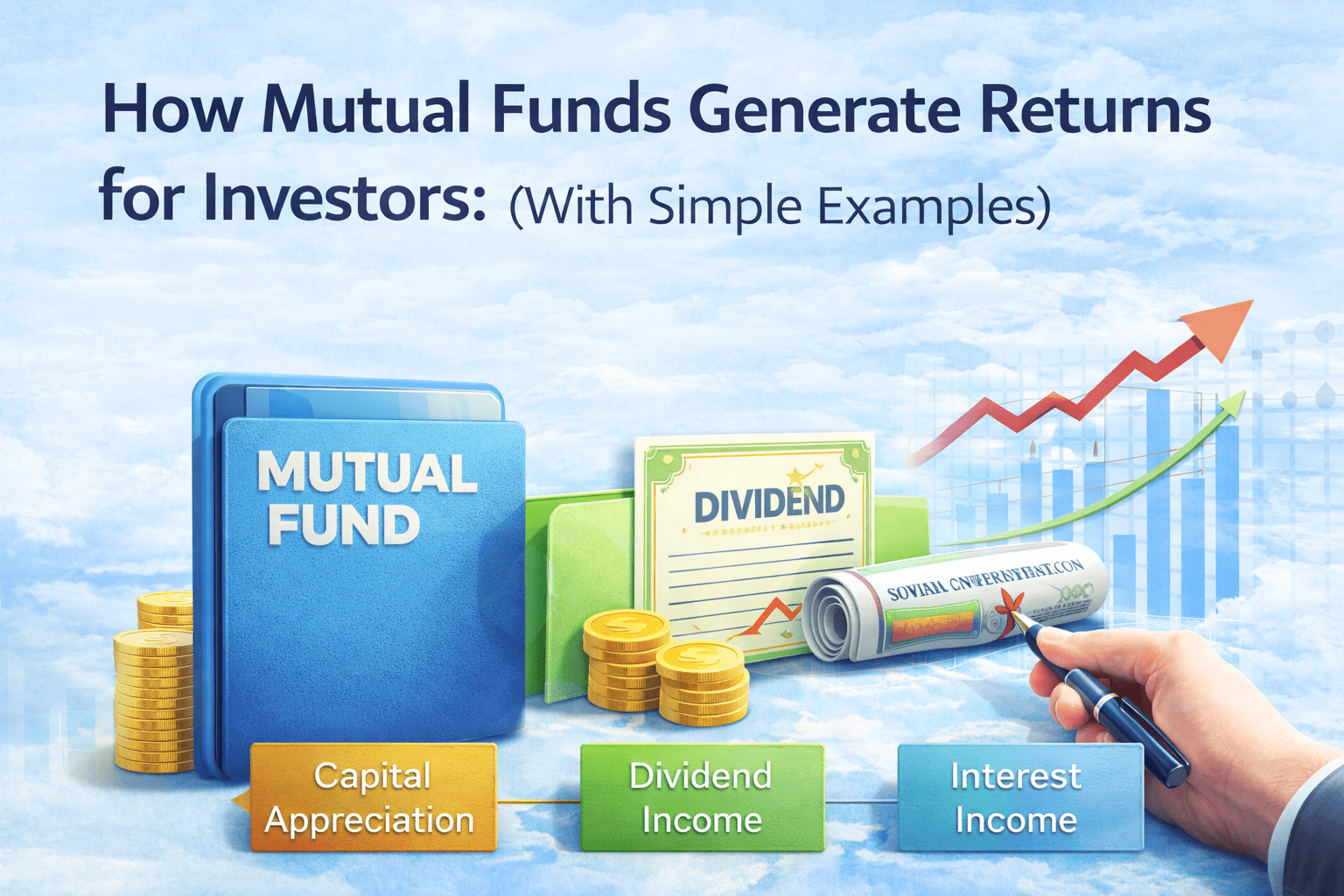
How Mutual Funds Generate Returns for Investors (With Simple Examples)
Step 5: Risk Metrics
Key Indicators:
- Standard Deviation
- Beta
- Sharpe Ratio
Interpretation:
- Lower volatility = stable fund
- Higher Sharpe ratio = better risk-adjusted returns
Important Insight:
- Understanding risk prevents emotional decisions during market volatility
Refer:
Are Mutual Funds Safe in India? Risks, Reality & What Investors Must Know (2026 Guide)
Step 6: Expense Ratio
Why It Matters:
- Reduces net returns
- Impacts compounding
Important Insight:
- Even small cost differences create a large long-term impact
Refer:
What is Expense Ratio in Mutual Funds? How It Affects Your Returns (2026 Guide)
Step 7: Fund Manager Evaluation
Check:
- Experience
- Track record
Important Insight:
- Consistency in fund management leads to predictable outcomes
Step 8: Investment Strategy
Understand whether the fund follows:
- Growth strategy
- Value strategy
Key Insight:
- Strategy alignment is essential for expectation management
How to Use a Factsheet in Real Life
Reading is not enough — application matters.
Use Factsheet To:
- Compare funds before investing
- Review portfolio every 6 months
- Decide whether to continue or exit
Important Insight:
- Factsheets are tools for decision-making, not just information
Common Mistakes to Avoid
- Ignoring risk metrics
- Over-focusing on returns
- Not checking portfolio concentration
- Comparing unrelated fund categories
Refer:
How NOT to Choose a Mutual Fund: 7 Critical Mistakes Investors Must Avoid (2026 Guide)
Quick Rule of Thumb
Before investing:
- Check consistency
- Evaluate risk
- Analyze portfolio
- Compare with the benchmark
Golden Rule:
- Never invest in a fund you do not understand
Mini Case Study
Investor A
- Chooses based on ranking
- Ignores factsheet
Investor B
- Analyzes risk and holdings
- Invests based on data
Outcome:
Investor B builds stable wealth, while Investor A struggles with volatility.
Frequently Asked Questions (FAQs)
1. How often should I read a factsheet?
Every 3–6 months.
2. Can I ignore risk metrics?
No. Risk metrics are critical for long-term success.
3. What is more important — returns or portfolio?
Portfolio, because it determines future performance.
4. Are fact sheets difficult to understand?
No. With practice, they become easy and highly useful.
5. Do all funds publish fact sheets?
Yes, all mutual funds release monthly fact sheets.
6. Should beginners read factsheets?
Yes. It builds strong investment discipline from the start.
Final Thought
A mutual fund fact sheet is one of the most powerful tools available to investors.
The difference between a beginner and an expert investor is simple:
One looks at returns, the other understands the details behind them.
Disclaimer
This content is for educational purposes only and does not constitute investment advice.
Mutual fund investments are subject to market risks. Investors should read all scheme-related documents carefully before investing and consider their financial goals, risk tolerance, and investment horizon.
Share this guide with your friends, family, and colleagues to help them make better financial decisions.
If this article helped you, share it with at least one person who needs this guidance.
Leave a Reply