
By Ashok Prasad, Founder, Niyyam
Published: March 2026
Introduction: Investing is a Journey, Not a One-Time Decision
Every investor starts as a beginner.
- Confused about SIP
- Unsure which fund to choose
- Worried about market fluctuations
Over time, some investors grow and build wealth successfully.
But many remain stuck.
Why?
Because they never upgrade their investing approach.
The difference between a beginner and an advanced investor is not luck—it is clarity, structure, and discipline.
This guide gives you a step-by-step roadmap to evolve systematically.
💡 Key Takeaways
- Investing evolves in stages—not overnight
- Beginners should focus on simplicity and consistency
- Advanced investors focus on allocation and optimization
- Portfolio structure matters more than fund selection
- Risk management becomes critical at advanced levels
- Regular review and rebalancing are essential
- Avoid overcomplication during early stages
Direct Answer
To transition from a beginner to an advanced mutual fund investor, start with simple SIPs, build a structured portfolio, focus on asset allocation, optimize risk, and regularly review and rebalance your investments.
Stage 1: Beginner Investor (Foundation Stage)
Typical Beginner Behavior
| Behavior | Reality |
|---|---|
| Searching best funds | Confusion |
| Timing the market | Mistake |
| Irregular investing | Poor results |
What You Should Do
| Action | Why |
|---|---|
| Start SIP | Discipline |
| Choose 1–2 funds | Simplicity |
| Stay consistent | Compounding |
If you are starting, you can also go through How to Start a SIP in India: A Beginner’s Step-by-Step Guide to build a strong base.
Stage 2: Early Intermediate (Stability Stage)
Focus Areas
| Focus | Explanation |
|---|---|
| Portfolio building | Not just funds |
| Diversification | Risk control |
| Goal-based investing | Direction |
Mindset Shift
| Beginner | Intermediate |
|---|---|
| Random investing | Structured |
| Short-term thinking | Long-term vision |
| Emotional decisions | Disciplined approach |
To build a proper structure, you can also explore Mutual Fund Portfolio Allocation Strategy (Equity vs Debt vs Hybrid – 2026 Guide).
Stage 3: Intermediate Investor (Growth Stage)
Key Actions
| Action | Benefit |
|---|---|
| Add mid/small cap | Higher returns |
| Increase SIP | Faster growth |
| Track performance | Better decisions |
Example Portfolio
| Category | Allocation |
|---|---|
| Large Cap | 50% |
| Mid Cap | 30% |
| Small Cap | 20% |
At this stage, it is important to avoid duplication. You can also explore What is Portfolio Overlap in Mutual Funds & Why It Can Reduce Your Returns (2026 Guide).
Stage 4: Advanced Investor (Optimization Stage)
Key Focus Areas
| Area | Explanation |
|---|---|
| Asset allocation | Core driver |
| Risk management | Capital protection |
| Rebalancing | Portfolio stability |
Advanced Structure
| Type | Allocation |
|---|---|
| Core | 70% |
| Satellite | 30% |
To implement this effectively, you can also go through How to Build a Core and Satellite Mutual Fund Portfolio (2026 Advanced Strategy Guide).
Quick Rule of Thumb
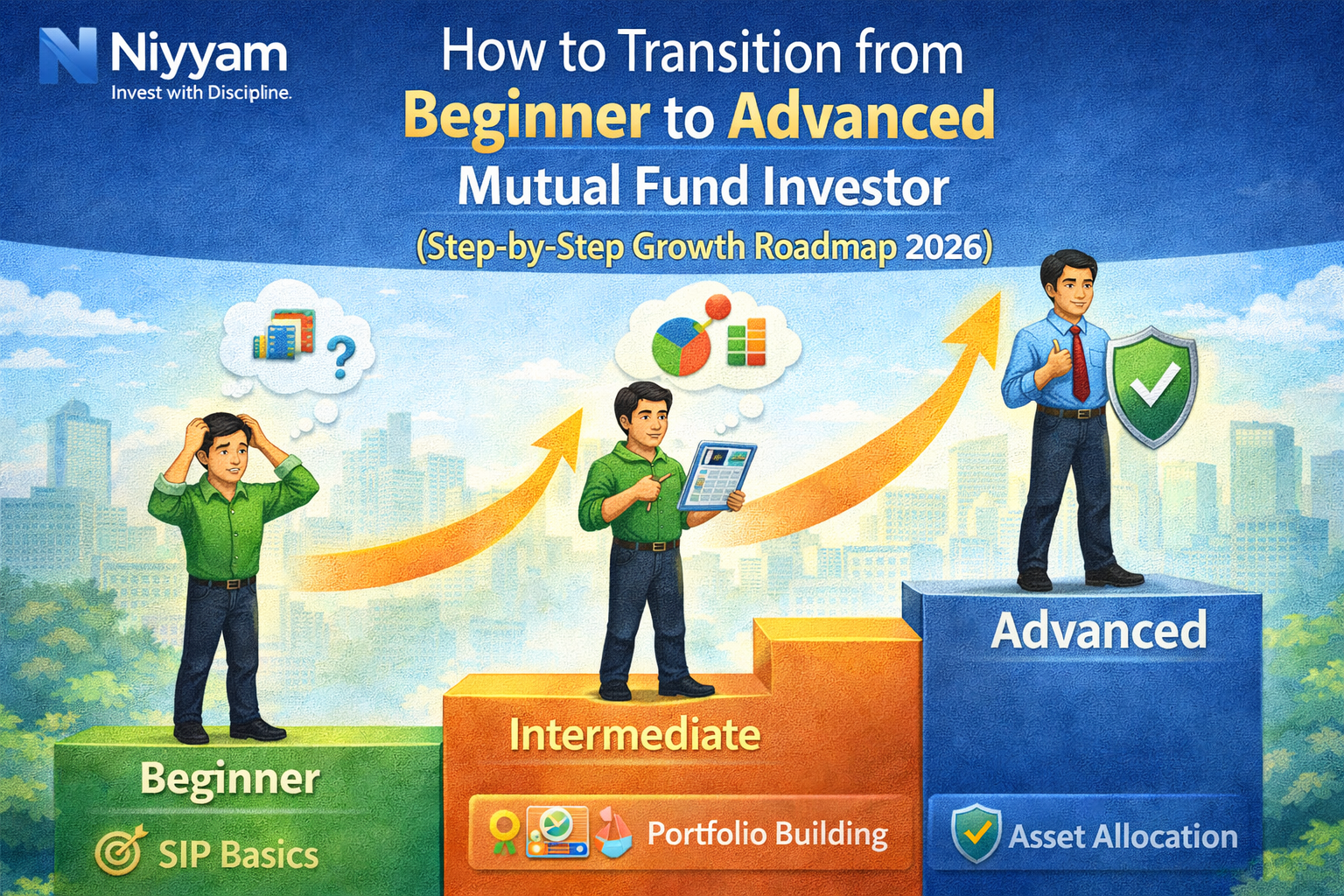
- Beginner → Simple SIP
- Intermediate → Structured portfolio
- Advanced → Optimized allocation
Investor Mindset Shift (Most Important)
The biggest transformation is not technical—it is psychological.
Mindset Evolution
| Stage | Thinking Pattern |
|---|---|
| Beginner | “Which fund gives highest return?” |
| Intermediate | “How do I build a portfolio?” |
| Advanced | “How do I manage risk and allocation?” |
Advanced investors focus on process—not outcomes.
Are You Ready to Move to the Next Stage?
Self-Assessment Checklist
| Question | Yes/No |
|---|---|
| Do you invest consistently? | |
| Do you understand asset allocation? | |
| Do you review your portfolio yearly? | |
| Do you avoid emotional decisions? |
If most answers are “Yes,” you are ready to move forward.
Monthly Investment Growth Strategy
| Stage | SIP Approach |
|---|---|
| Beginner | Fixed SIP |
| Intermediate | Step-up SIP |
| Advanced | Strategic allocation |
To scale your SIP, you can also explore How to Increase SIP Amount Over Time (Step-Up SIP Strategy for 2026 Investors).
Common Mistakes During Transition
- Overcomplicating too early
- Chasing high returns
- Ignoring risk management
Skill Upgrade Checklist
| Skill | Importance |
|---|---|
| Fund selection | Medium |
| Asset allocation | High |
| Risk management | Very high |
| Rebalancing | Critical |
Portfolio Evolution Example
| Stage | Funds | Structure |
|---|---|---|
| Beginner | 1–2 | Simple |
| Intermediate | 3–4 | Balanced |
| Advanced | 4–5 | Structured |
Risk Management Evolution
| Stage | Approach |
|---|---|
| Beginner | Ignored |
| Intermediate | Basic |
| Advanced | Active |
If you want to strengthen your risk understanding, you can also explore How to Reduce Risk in Mutual Fund Investing (2026 Guide).
Advanced Insight: What Actually Drives Wealth
| Factor | Impact |
|---|---|
| Asset allocation | Highest |
| Consistency | High |
| Fund selection | Moderate |
Conclusion: Growth is a Process
- You don’t become advanced overnight
- You evolve step by step
- Discipline beats intelligence
Final Action Plan
- Start simple
- Build structure
- Optimize gradually
- Stay consistent
Final Verdict
Every investor must evolve.
- Beginner = Start
- Intermediate = Structure
- Advanced = Optimize
Final Thought
Wealth is not created by knowing everything.
- It is created by doing the right things consistently over time
Frequently Asked Questions (FAQs)
1. How long does it take to become an advanced investor?
Typically 3–5 years.
2. Should beginners focus on returns?
No, focus on consistency.
3. How many funds should I have?
3–5 funds are ideal.
4. Is diversification important?
Yes, it reduces risk.
5. Should I rebalance regularly?
Yes, annually.
6. What is the biggest mistake investors make?
Chasing returns instead of structure.
Disclaimer
This content is for educational purposes only and does not constitute investment advice.
Mutual fund investments are subject to market risks. Investors should read all scheme-related documents carefully before investing and consider their financial goals, risk tolerance, and investment horizon.
Share this guide with your friends, family, and colleagues to help them make better financial decisions.
If this article helped you, share it with at least one person who needs this guidance.
Leave a Reply