
By Ashok Prasad, Founder, Niyyam
Published: March 2026
Mutual fund investing is not just about selecting the right fund.
It is equally important to understand how to invest, when to invest, and how to withdraw.
Three powerful strategies that help investors across different stages of their financial journey are:
- SIP (Systematic Investment Plan)
- SWP (Systematic Withdrawal Plan)
- STP (Systematic Transfer Plan)
Many investors are familiar with these terms, but often struggle to understand:
- What each one actually does
- When to use them
- How they fit into a complete financial plan
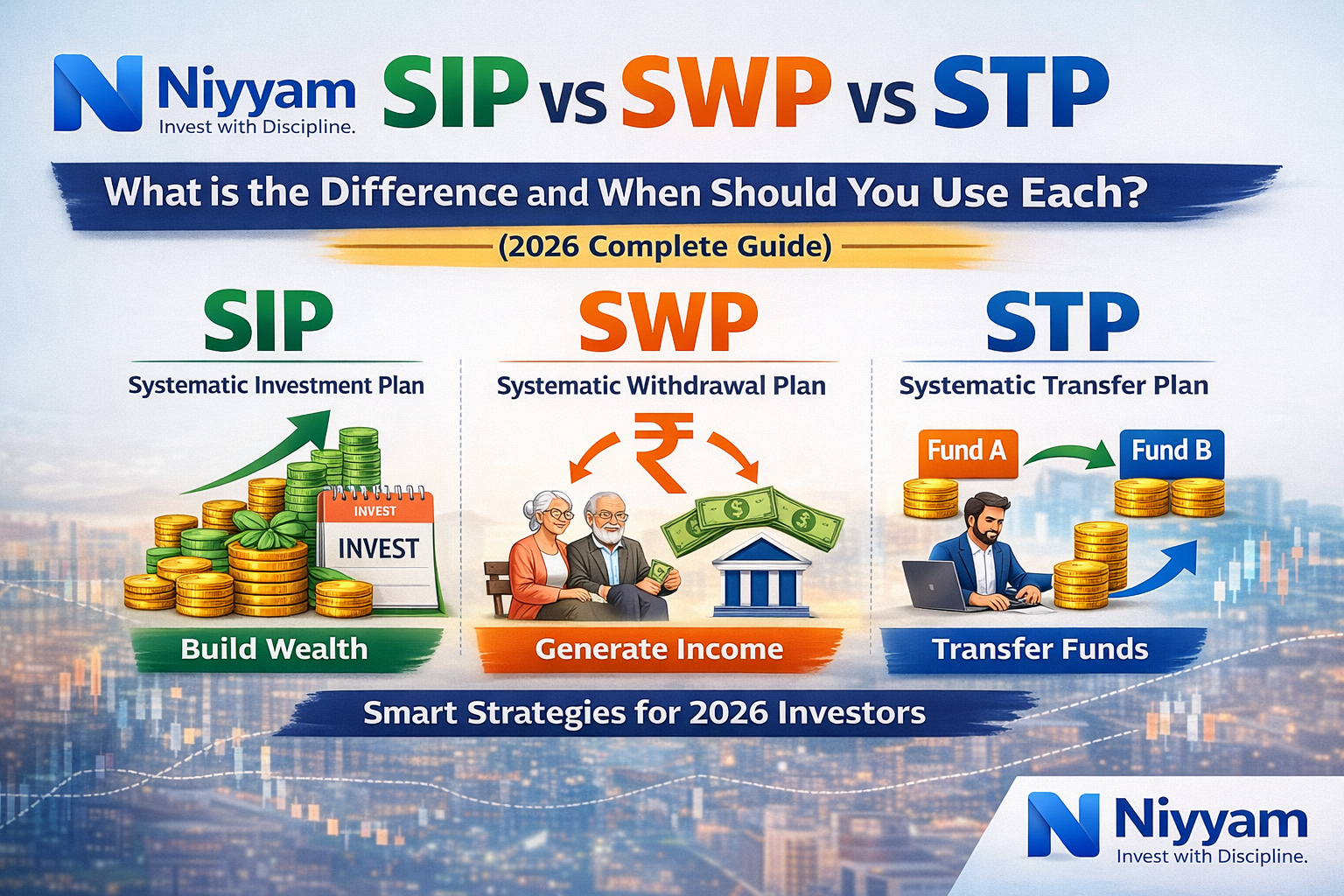
Understanding the difference between SIP, SWP, and STP can help you build wealth, manage risk, and generate income effectively.
💡 Key Takeaways
- SIP is for Wealth Creation: It allows you to invest regularly and benefit from compounding.
- SWP is for Income Generation: It helps convert your investments into a steady cash flow.
- STP is for Smart Transfer: It enables the gradual movement of funds to reduce timing risk.
- Each Strategy Has a Role: SIP builds wealth, STP optimizes entry, SWP provides income.
- Using All Three is Powerful: Together, they create a complete investment lifecycle.
What is SIP (Systematic Investment Plan)?
SIP allows you to invest a fixed amount at regular intervals into a mutual fund.
Example:
- ₹5,000 invested every month
- Units are purchased regularly
Key Benefits:
- Builds discipline
- Reduces timing risk
- Enables rupee cost averaging
Important Insight:
- SIP is the most effective method for long-term wealth creation
Refer:
What is SIP in Mutual Funds? A Complete Beginner’s Guide (2026)
What is SWP (Systematic Withdrawal Plan)?
SWP allows you to withdraw a fixed amount from your mutual fund at regular intervals.
Example:
- Investment: ₹20 lakh
- Monthly withdrawal: ₹20,000
Key Benefits:
- Provides regular income
- Flexible withdrawal
- Potential tax efficiency
Important Insight:
- SWP converts accumulated wealth into a steady income stream
Refer:
SWP in Mutual Funds Explained: How to Create Monthly Income (2026 Guide for Investors)
What is STP (Systematic Transfer Plan)?
STP allows you to transfer money from one mutual fund to another in a phased manner.
Example:
- ₹5 lakh in a liquid fund
- Transfer ₹50,000 monthly into the equity fund
Key Benefits:
- Reduces market timing risk
- Enables gradual entry
- Better management of lump sum investments
Important Insight:
- STP is the safest way to deploy large amounts into the market
Refer:
Lump Sum Investment Strategy in Mutual Funds: When and How to Invest (2026 Guide)
SIP vs SWP vs STP: Key Differences
| Feature | SIP | SWP | STP |
|---|---|---|---|
| Purpose | Investment | Withdrawal | Transfer |
| Money Flow | Bank → Fund | Fund → Bank | Fund → Fund |
| Ideal For | Wealth creation | Income generation | Lump sum management |
| Risk Impact | Reduces timing risk | Depends on withdrawal rate | Reduces entry risk |
Key Insight:
- These strategies serve different stages of your financial journey
When Should You Use SIP?
Use SIP If:
- You have a regular income
- You are investing for long-term goals
- You want disciplined investing
Ideal For:
- Salaried individuals
- Beginners
- Long-term investors
Important Insight:
- SIP works best when combined with time and consistency
Refer:
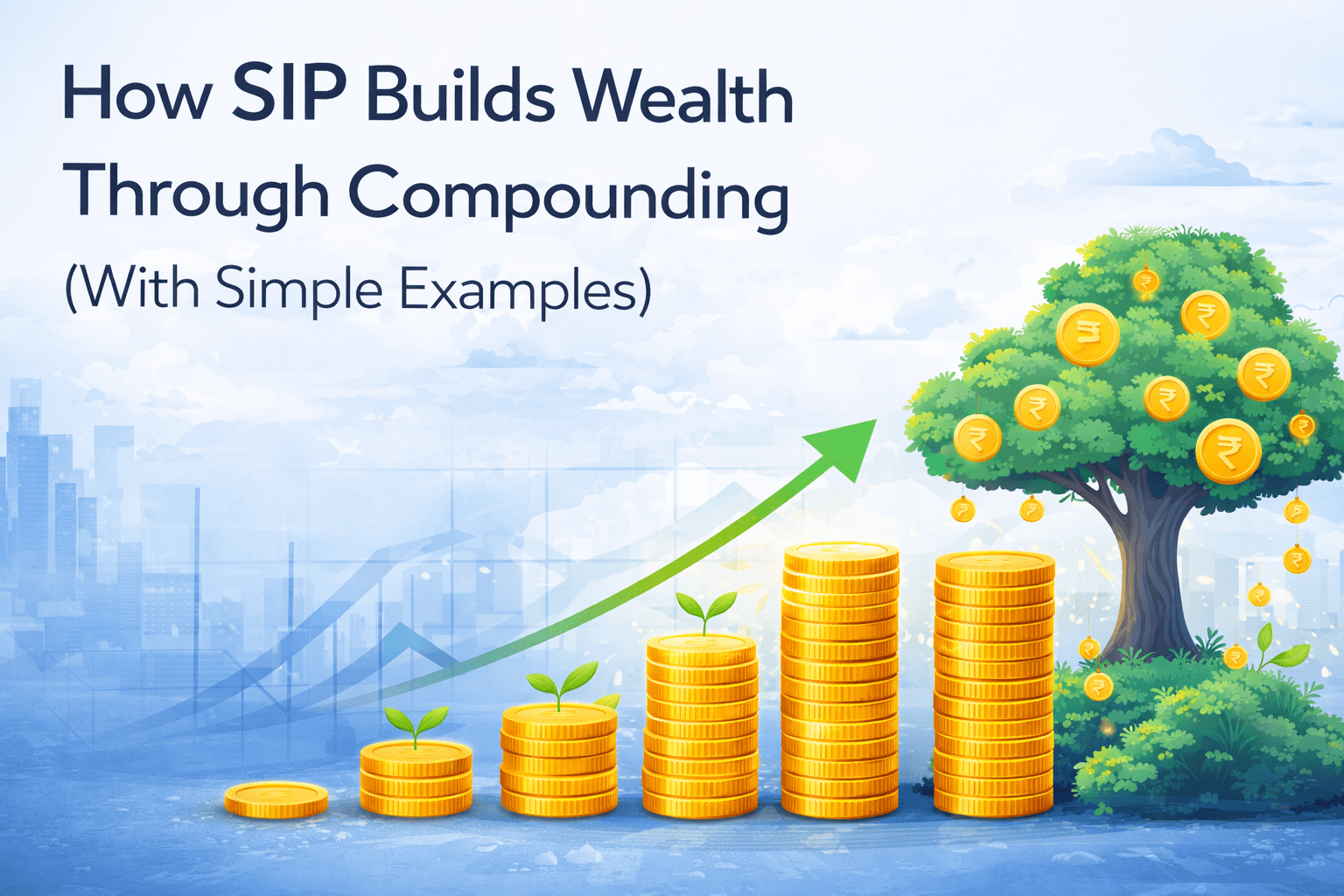
How SIP Builds Wealth Through Compounding (With Simple Examples)
When Should You Use STP?
Use STP If:
- You have a lump sum amount
- You want to avoid timing the market
- You want a gradual market entry
Ideal For:
- Bonuses
- Inheritance
- Market uncertainty
Key Insight:
- STP protects you from investing all your money at the wrong time
When Should You Use SWP?
Use SWP If:
- You need a regular income
- You are retired or nearing retirement
- You want passive cash flow
Ideal For:
- Retirees
- Income-focused investors
Important Insight:
- SWP helps you use your investments without exhausting your capital immediately
How SIP, STP, and SWP Work Together
These are not competing strategies — they complement each other.
Investment Lifecycle:
Phase 1: Wealth Creation
Use SIP
Phase 2: Lump Sum Deployment
Use STP
Phase 3: Income Generation
Use SWP
Key Insight:
- A complete financial strategy uses all three at different stages
Practical Example
Scenario:
An investor follows a structured approach:
Step 1:
- Invests ₹10,000/month via SIP
Step 2:
- Receives ₹5 lakh bonus
- Uses STP for gradual investment
Step 3:
- Builds a corpus over 15 years
- Uses SWP for monthly income
Outcome:
- Wealth created
- Risk managed
- Income generated
Key Insight:
- The right strategy at the right time leads to optimal results
How to Choose the Right Strategy Based on Your Life Stage
Understanding when to use SIP, STP, and SWP becomes easier when aligned with your life stage.
Early Career (20s–30s)
- Focus: Wealth creation
- Strategy: SIP
- Reason: Regular income + long time horizon
Mid Career (30s–40s)
- Focus: Growth + expansion
- Strategy: SIP + STP
- Reason: Managing bonuses and increasing investments
Pre-Retirement (40s–50s)
- Focus: Capital protection
- Strategy: Balanced allocation + selective STP
- Reason: Preparing for the income phase
Retirement (50+)
- Focus: Income generation
- Strategy: SWP
- Reason: Converting accumulated wealth into monthly income
Key Insight:
- The right strategy depends more on your life stage than market conditions
Common Mistakes to Avoid
1. Using SWP Too Early
Can reduce capital prematurely.
2. Investing a lump sum without STP
Increases the risk of wrong timing.
3. Stopping SIP During Market Downturns
Reduces long-term returns.
4. Confusing Purpose of Strategies
Leads to inefficient investing.
Important Insight:
- Clarity of purpose is essential for successful investing
Refer:
How Not to Choose a Mutual Fund: 7 Critical Mistakes Investors Must Avoid (2026 Guide)
Quick Rule of Thumb
- Want to invest regularly → SIP
- Have lump sum → STP
- Need income → SWP
Golden Rule:
- Use the right tool for the right purpose
Frequently Asked Questions (FAQs)
1. Which is better — SIP, SWP, or STP?
All are useful for different purposes.
2. Can I use SIP and STP together?
Yes, they complement each other.
3. Is SWP safe?
Depends on the withdrawal rate and fund choice.
4. What is best for beginners?
SIP is the best starting point.
5. Can I stop these anytime?
Yes, all are flexible.
6. Which strategy builds wealth fastest?
SIP with long-term discipline.
Final Thought
SIP, STP, and SWP are not alternatives.
They are three powerful tools designed for different stages of your financial journey.
Most investors struggle not because they lack knowledge,
but because they use the wrong strategy at the wrong time.
If you understand when and how to use SIP, STP, and SWP,
you can build, manage, and utilize your wealth efficiently.
Disclaimer
This content is for educational purposes only and does not constitute investment advice.
Mutual fund investments are subject to market risks. Investors should read all scheme-related documents carefully before investing and consider their financial goals, risk tolerance, and investment horizon.
Share this guide with your friends, family, and colleagues to help them make better financial decisions.
If this article helped you, share it with at least one person who needs this guidance.
Leave a Reply