
By Ashok Prasad, Founder, Niyyam
Published: March 2026
When most investors select a mutual fund, they focus heavily on returns.
“Which fund gave 15%?”
“Which one performed best last year?”
But there is a silent factor that continuously reduces your returns — the expense ratio.
And here’s the truth:
Two funds with similar performance can create a difference of lakhs over time — purely because of cost.
In this detailed 2026 guide, you’ll understand:
• What expense ratio really is
• How it impacts your SIP and long-term wealth
• Direct vs regular cost difference
• Real-life calculations and tables
• How to choose funds efficiently
Let’s simplify this step-by-step.
What is Expense Ratio in Mutual Funds?
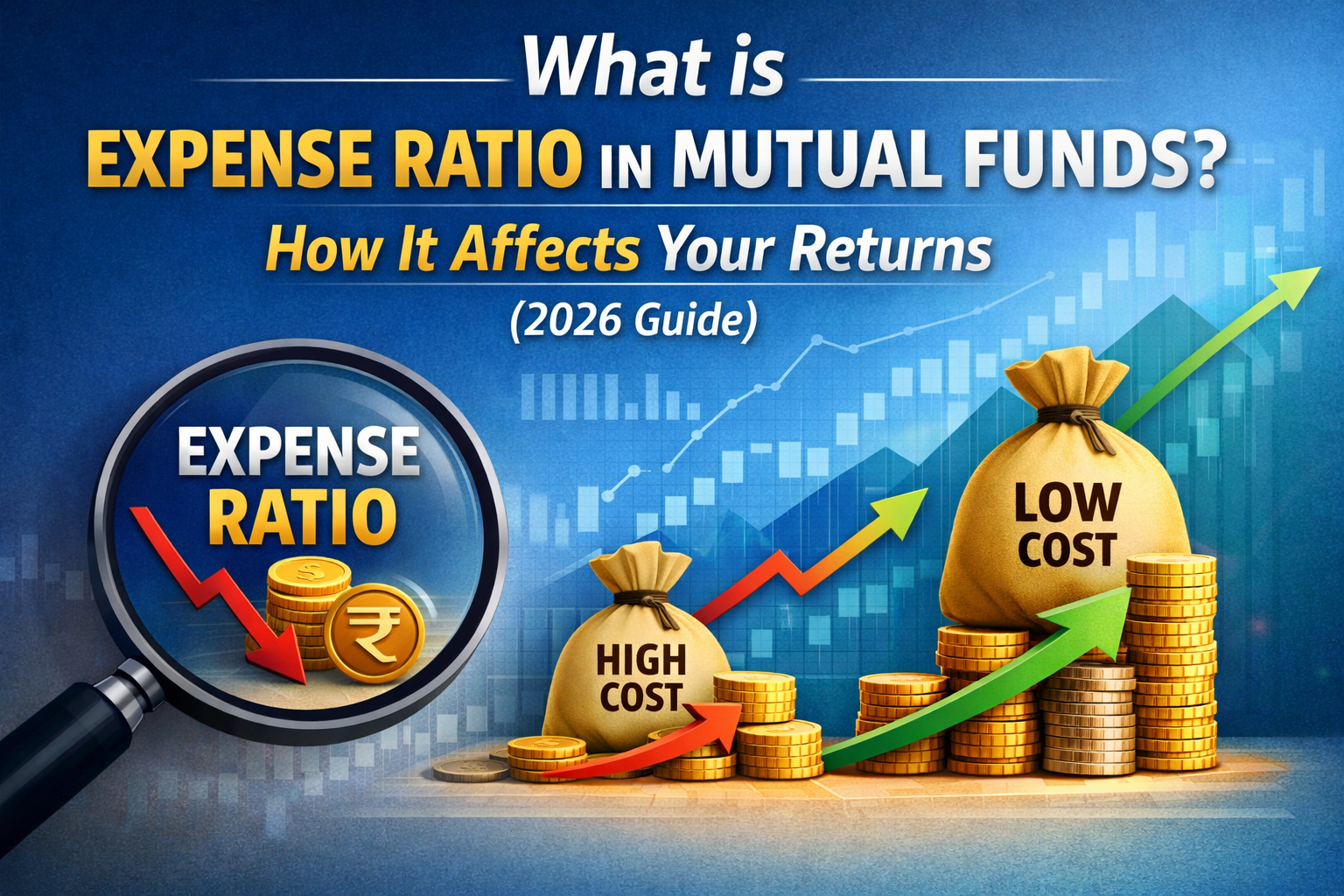
The expense ratio is the annual fee charged by a mutual fund to manage your money.
It is expressed as a percentage and automatically deducted from the fund’s NAV (Net Asset Value).
What does it include?
• Fund manager fees
• Administrative and operational costs
• Marketing and distribution expenses
• Registrar and compliance charges
Example:
If a fund has an expense ratio of 1.5%:
• Investment: ₹1,00,000
• Annual cost: ₹1,500
But here’s the key:
You never see this deduction directly — it is already adjusted in the NAV.
The Hidden Reality: Expense Ratio is Charged Daily
Unlike a one-time fee, the expense ratio is:
• Charged every single day
• Adjusted in NAV continuously
• Applied to your total invested value
Key Insight:
Expense ratio is one of the very few guaranteed deductions in investing. Returns are uncertain — costs are not.
How Expense Ratio Impacts Your Returns (Real SIP Example)
Let’s understand with a practical example.
Scenario:
• SIP: ₹10,000 per month
• Duration: 20 years
• Expected return before cost: 12%
Now compare:
Fund A (Higher Cost)
• Expense ratio: 2%
• Net return: ~10%
Fund B (Lower Cost)
• Expense ratio: 0.5%
• Net return: ~11.5%
Final Outcome:
• Fund A: ~₹76 lakhs
• Fund B: ~₹95 lakhs
Difference:
₹19 lakhs lost — only due to the higher expense ratio
If you’ve already gone through our detailed guide on How SIP builds wealth through Compunding, you’ll realize how small differences in return percentages can significantly impact your final wealth over time.
Expense Ratio Impact on Returns (Comparison Table)
Let’s expand this further with a structured comparison.
Scenario:
• SIP: ₹10,000/month
• Duration: 20 years
• Market return: 12%
| Expense Ratio | Net Return | Final Corpus (Approx) | Wealth Loss vs 0.5% |
|---|---|---|---|
| 0.5% | 11.5% | ₹95 lakhs | — |
| 1.0% | 11% | ₹89 lakhs | ₹6 lakhs |
| 1.5% | 10.5% | ₹83 lakhs | ₹12 lakhs |
| 2.0% | 10% | ₹76 lakhs | ₹19 lakhs |
Key Takeaways:
• Even a 0.5% increase can reduce wealth significantly
• Higher costs reduce compounding power
• Longer investment horizon = bigger impact
Critical Insight:
Expense ratio reduces not just returns — it reduces the future earning potential of your money.
Direct vs Regular Mutual Funds: The Cost Gap
One of the biggest cost differences comes from choosing the right plan.
Direct Plans:
• No distributor commission
• Lower expense ratio
• Better long-term returns
Regular Plans:
• Includes commission
• Higher expense ratio
• Lower final corpus
Example:
• Direct: 0.8%
• Regular: 1.8%
1% extra cost every year can lead to lakhs lost over time
If you’re still unsure which route to take, our detailed comparison on Direct vs Regular Mutual Funds and which one you should choose will give you complete clarity.

Key Insight:
If you invest on your own, Direct plans are usually more cost-efficient.
Expense Ratio Across Different Fund Categories
1. Equity Funds
• Range: 0.8% to 2.25%
• Active management → higher cost
2. Index Funds
• Range: 0.1% to 0.5%
• Passive → very low cost
3. Debt Funds
• Range: 0.2% to 1%
4. Hybrid Funds
• Range: 0.5% to 1.5%
Key Insight:
Lower cost is good — but only if performance is reasonable.
This becomes even more important when you are building your allocation strategy, which we have explained in our guide on how to build a balanced mutual fund portfolio for long-term wealth creation.
Active vs Passive Funds: Cost vs Performance
Active Funds:
• Higher cost
• Try to beat the market
• Depend on the fund manager
Passive Funds:
• Low cost
• Track index
• Consistent performance
Reality:
• Many active funds fail to outperform after costs
Key Insight:
If the performance difference is small, lower-cost funds usually win over time.
SEBI Rules on Expense Ratio (India – 2026)
SEBI regulates mutual fund costs in India.
Key Points:
• Expense ratio capped based on AUM
• Larger funds must reduce costs
• Additional charges allowed for B30 cities
Why this matters:
It protects investors from excessive fees.
How to Check Expense Ratio Before Investing
1. AMC Website
• Check fund details → TER
2. Investment Platforms
• Compare funds side-by-side
3. Monthly Factsheets
• Published by fund houses
Key Insight:
Always compare costs before investing — not after.
When is a High Expense Ratio Worth It?
A higher expense ratio is justified only if:
• Fund consistently beats benchmark
• Strong long-term track record
• Better risk-adjusted returns
Simple Rule:
Pay more only if you consistently earn more.
Common Mistakes Investors Make
1. Ignoring Expense Ratio
2. Choosing Regular Plans unknowingly
3. Assuming that the cheapest fund is the best
4. Over-diversifying across funds
5. Not reviewing costs regularly
Key Insight:
Cost control is as important as return generation.
Practical Strategy for Investors (2026)
Step 1: Prefer Direct Plans
Step 2: Use Index Funds as Core
Step 3: Add 1–2 high-quality active funds
Step 4: Review the expense ratio yearly
Step 5: Stay invested long-term
How Expense Ratio Connects to Your Overall Portfolio
If you’ve already explored concepts like portfolio allocation, SIP discipline, and fund selection, you’ll notice one thing:
Expense ratio impacts everything.
Even a well-built portfolio can underperform if:
• Costs are high
• Funds are inefficient
Key Insight:
Efficient investing = good returns + low costs + discipline
Final Thoughts
Expense ratio may look like a small percentage — but over time, it has a massive impact on your wealth.
Remember:
• It is charged every year regardless of performance
• It directly reduces your returns
• Even a 1% difference can cost lakhs
The goal is not to choose the cheapest fund.
The goal is to choose:
The most efficient fund after cost, risk, and performance.
Because ultimately:
What you keep matters more than what you earn.
Soft CTA
If you want to build a mutual fund portfolio with clarity and discipline, having the right structure makes all the difference.
Niyyam is designed to simplify investing and help you stay consistent with your financial goals.
Start your wealth creation journey with confidence.
Disclaimer
Mutual funds Investments are subject to market risks. Please read all scheme-related documents carefully before investing.
Share this guide with your friends, family, and colleagues to help them make better financial decisions.
If this article helped you, share it with at least one person who needs this guidance.
Leave a Reply