
By Ashok Prasad, Founder, Niyyam
Published: March 2026
Introduction
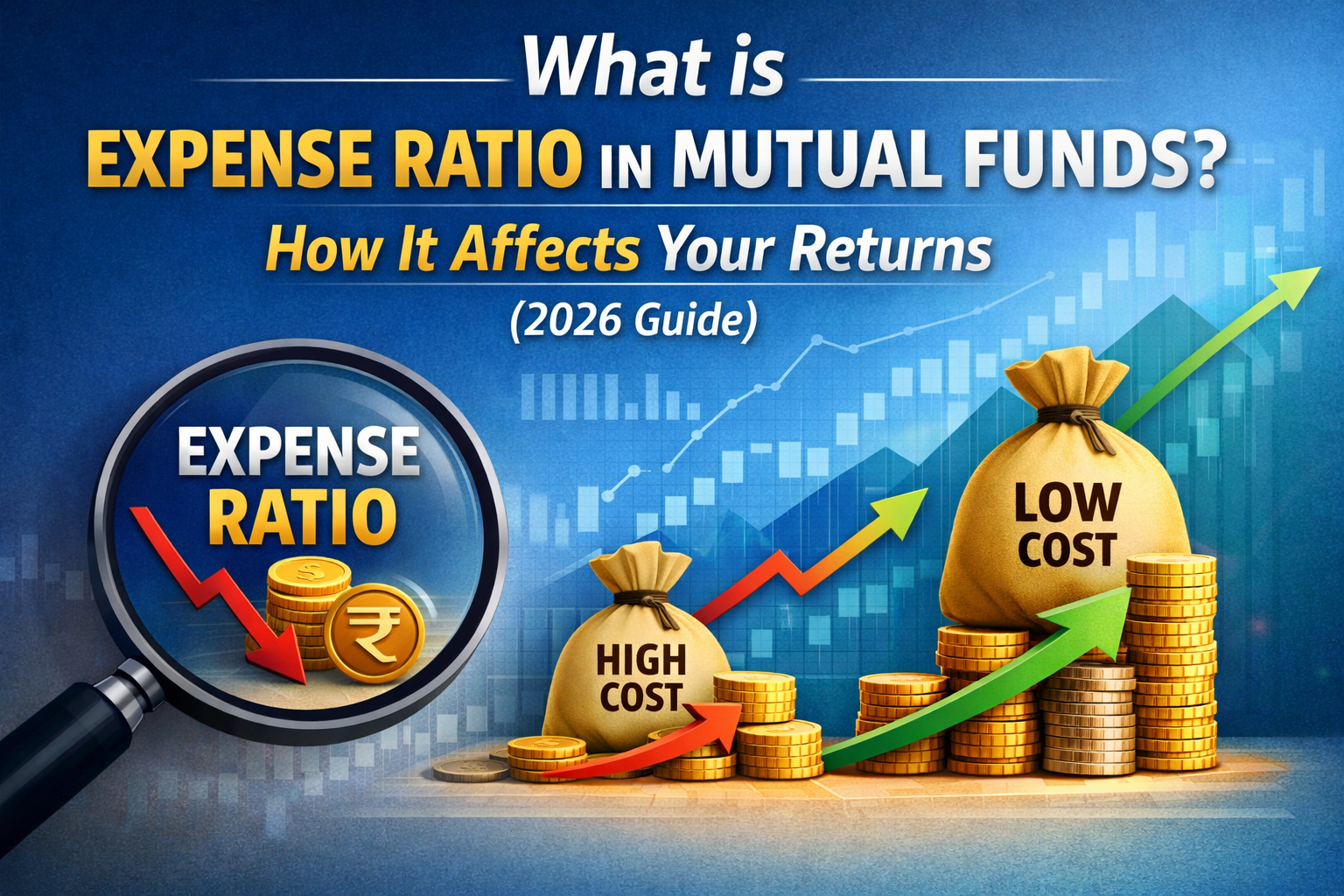
Expense ratio in mutual funds is one of the most important yet ignored factors that directly impacts your long-term returns.
When most investors select a mutual fund, they focus heavily on returns.
“Which fund gave 15%?”
“Which one performed best last year?”
But there is a silent factor that continuously reduces your returns — the expense ratio.
And here’s the reality:
Two funds with similar performance can create a difference of lakhs over time purely because of cost.
Understanding expense ratio is not just a technical concept. It is a core part of smart investing, especially when you are investing through SIPs over long periods. Many investors ignore this factor in the beginning, but over time, it becomes one of the biggest determinants of actual wealth creation.
Once you understand how mutual funds work, the next step is selecting efficient funds that maximize returns after cost. To learn this in a structured way, read our How to Choose the Best Mutual Fund in India (Complete 2026 Framework).
💡 Key Takeaways
- Expense ratio is the annual cost charged by mutual funds
- It is deducted daily from NAV and not shown separately
- Even a small difference in cost impacts long-term wealth significantly
- Direct plans are more cost-efficient than regular plans
- Expense ratio directly affects compounding
- Smart investors focus on returns after cost, not just returns
Direct Answer
The expense ratio in mutual funds is the annual fee charged by the fund house to manage your investments. It is expressed as a percentage of your total investment and is deducted daily from the fund’s NAV, which means it directly reduces your overall returns over time.
What is Expense Ratio in Mutual Funds?
The expense ratio represents the total annual cost of managing a mutual fund.
It includes:
- Fund manager fees
- Administrative costs
- Marketing and distribution expenses
- Compliance and operational charges
Example
If you invest ₹1,00,000 in a mutual fund with a 1.5% expense ratio:
- Annual cost = ₹1,500
However, this amount is not charged separately. It is automatically adjusted in the NAV, which is why many investors fail to notice it.
If you are new to investing, it is important to first understand what is a mutual fund and how it works before diving deeper into cost structures.
How Expense Ratio is Charged (Important Insight)
Many investors believe expense ratio is deducted once a year. This is not correct.
In reality, it is:
- Charged daily
- Adjusted continuously in NAV
- Applied to your total invested amount
This means that every single day, a small portion of your returns is reduced due to cost.
Key Insight
Expense ratio is one of the few guaranteed factors in investing.
Markets may go up or down, but this cost is always applied.
How Expense Ratio Impacts Your Returns (Real Example)
Let’s understand this with a realistic SIP scenario.
Scenario
- SIP: ₹10,000 per month
- Duration: 20 years
- Expected return before cost: 12%
Fund A (Higher Cost)
- Expense ratio: 2%
- Net return: ~10%
- Final corpus: ~₹76 lakhs
Fund B (Lower Cost)
- Expense ratio: 0.5%
- Net return: ~11.5%
- Final corpus: ~₹95 lakhs
Final Difference
₹19 lakhs lost purely due to higher cost.
This is the real impact of compounding working against you.
If you want to understand how compounding builds wealth over time, read how SIP builds wealth through compounding with simple examples.
Expense Ratio Impact Table
| Expense Ratio | Net Return | Final Corpus | Loss vs Low Cost |
|---|---|---|---|
| 0.5% | 11.5% | ₹95L | — |
| 1.0% | 11% | ₹89L | ₹6L |
| 1.5% | 10.5% | ₹83L | ₹12L |
| 2.0% | 10% | ₹76L | ₹19L |
Key Insight
Even a 0.5% increase in cost can significantly reduce your final wealth over long durations.
Direct vs Regular Mutual Funds (Cost Difference)
One of the biggest reasons investors end up paying higher expense ratios is choosing the wrong plan.
Direct Plans
- No distributor commission
- Lower expense ratio
- Better long-term returns
Regular Plans
- Includes commission
- Higher expense ratio
- Lower final returns
Example
- Direct plan: 0.8%
- Regular plan: 1.8%
That extra 1% cost may seem small, but over 20 years, it can result in a significant loss of wealth.
To understand this better, read direct vs regular mutual funds which should you choose.
Expense Ratio Across Different Fund Categories
Equity Funds
- 0.8% to 2.25%
Index Funds
- 0.1% to 0.5%
Debt Funds
- 0.2% to 1%
Hybrid Funds
- 0.5% to 1.5%
Insight
Lower cost is important, but it should not be the only factor. Performance consistency and risk also matter.
At this stage, fund selection becomes critical. For a structured approach, refer to How to Choose the Best Mutual Fund in India (Complete 2026 Framework).
Active vs Passive Funds: Cost vs Performance
Active Funds
- Higher cost
- Aim to outperform the market
- Depend on the fund manager’s skill
Passive Funds
- Lower cost
- Track market index
- Consistent performance
Reality
Many active funds fail to outperform after considering costs.
Key Insight
If the performance difference is small, lower-cost funds generally deliver better long-term results.
SEBI Rules on Expense Ratio (India – 2026)
SEBI has implemented strict regulations to protect investors.
Key Rules
- Expense ratios are capped
- Larger funds must reduce costs
- Additional charges allowed for smaller cities
These regulations ensure transparency and prevent excessive charges.
How to Check Expense Ratio Before Investing
You can check the expense ratio easily using:
- AMC websites
- Investment platforms
- Monthly factsheets
Tip
Always compare expense ratios before investing, not after.
When is a High Expense Ratio Justified?
A higher expense ratio may be acceptable if:
- The fund consistently outperforms its benchmark
- It has a strong long-term track record
- It delivers better risk-adjusted returns
Simple Rule
Pay more only when you consistently earn more.
Common Mistakes Investors Make
- Ignoring the expense ratio completely
- Choosing regular plans unknowingly
- Selecting funds based only on past returns
- Over-diversifying investments
- Not reviewing costs periodically
To understand these mistakes in depth and how they impact long-term wealth creation, it is important to look beyond cost factors and focus on investor behavior and decision-making patterns. For a complete breakdown of common mistakes and practical strategies to avoid them, read our Common Mutual Fund Mistakes and Smart Investor Strategies (2026 Guide).
Practical Strategy for Investors (2026)
- Prefer direct plans
- Use index funds as the core portfolio
- Add limited high-quality active funds
- Review expense ratios annually
- Stay invested for the long term
While these strategies improve long-term outcomes, many investors still underperform due to behavioral mistakes such as panic selling, return chasing, and a lack of discipline. To understand how these behaviors impact your returns and how to avoid them, refer to our Common Mutual Fund Mistakes and Smart Investor Strategies (2026 Guide).
How Expense Ratio Connects to Your Portfolio
Expense ratio is not an isolated concept. It directly affects your entire investment strategy.
Even a well-diversified portfolio can underperform if the costs are too high.
That is why fund selection becomes critical, not just the fund category. To build a complete decision-making framework, read How to Choose the Best Mutual Fund in India (Complete 2026 Framework).
Conclusion
Expense ratio may look like a small percentage, but its long-term impact is significant.
It:
- Reduces your returns every year
- Affects compounding
- Can lead to lakhs in lost wealth
The goal is not to choose the cheapest fund.
The goal is to choose the most efficient fund after considering cost, performance, and risk.
Final Thought
In investing, what you keep matters more than what you earn.
Controlling cost is one of the most powerful financial decisions you can make.
Frequently Asked Questions (FAQs)
1. What is a good expense ratio for mutual funds in India?
An expense ratio below 1% is generally considered good, especially for long-term investors. Index funds usually have even lower costs.
2. Does expense ratio affect SIP returns?
Yes, expense ratio directly reduces your returns and affects long-term compounding.
3. Are direct plans always better than regular plans?
In most cases, direct plans are better because they have lower costs and higher net returns.
4. Can a high expense ratio fund still be worth it?
Yes, but only if the fund consistently delivers higher returns after adjusting for cost.
5. How often is expense ratio charged?
Expense ratio is charged daily and reflected in the NAV of the fund.
Disclaimer
This content is for educational purposes only and does not constitute investment advice.
Mutual fund investments are subject to market risks. Investors should read all scheme-related documents carefully before investing and consider their financial goals, risk tolerance, and investment horizon.
Share this guide with your friends, family, and colleagues to help them make better financial decisions.
If this article helped you, share it with at least one person who needs this guidance.
Leave a Reply