
By Ashok Prasad, Founder, Niyyam
Published: March 2026
Introduction
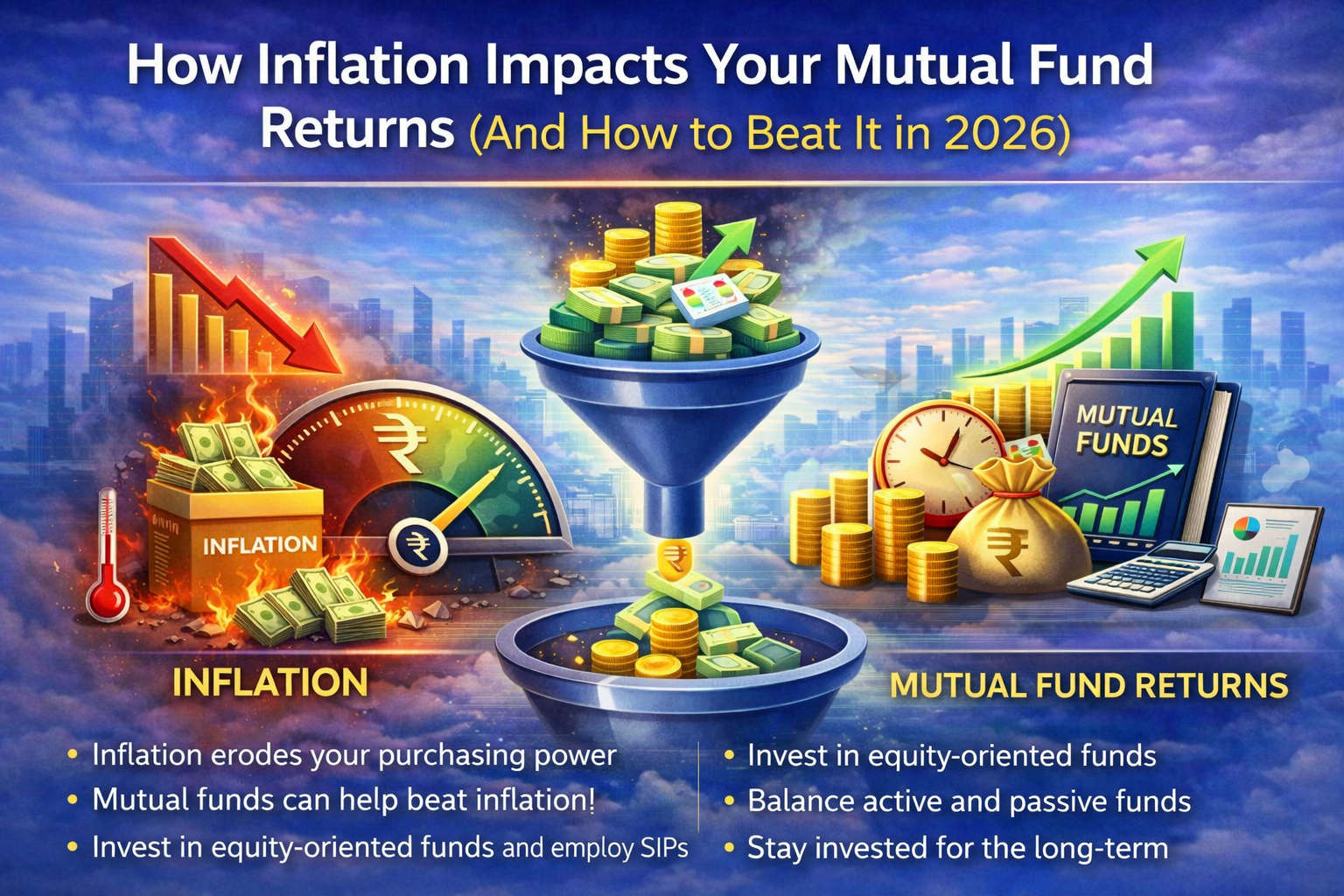
Inflation vs mutual fund returns is one of the most critical concepts investors must understand because your real wealth depends not just on returns, but on returns after inflation.
Most investors evaluate their investments using a simple question:
“What returns did I earn?”
But the more important question is:
“What is my real return after inflation?”
While understanding real returns is important, how you allocate your investments across equity, debt, and hybrid funds ultimately determines whether you can consistently beat inflation. To learn how to structure your portfolio effectively, read our Mutual Fund Portfolio Allocation Strategy (Complete Guide 2026).
If your mutual fund generates 10% returns and inflation is 7%, your actual wealth growth is only 3%.
This is where most investors make a critical mistake.
They focus on visible returns but ignore the hidden impact of inflation.
In this guide, you will learn:
- How inflation reduces your investment returns
- Why nominal returns can be misleading
- Which mutual funds perform better during inflation
- How to build a portfolio that consistently beats inflation
💡 Key Takeaways
- Inflation reduces the purchasing power of money
- Real returns matter more than nominal returns
- Equity mutual funds are the best long-term hedge
- Costs and allocation significantly impact real returns
- Long-term discipline is essential to beat inflation
Direct Answer
Do mutual funds beat inflation?
Yes, equity mutual funds can beat inflation over the long term, while debt funds may struggle during high inflation periods. The key is proper asset allocation, cost control, and long-term investing.
What is Inflation (Simple Understanding)
Inflation refers to the gradual increase in the cost of living over time.
This includes:
- Food and groceries
- Rent and housing
- Education and healthcare
- Transportation and daily expenses
As prices increase, your purchasing power decreases.
This means:
The same amount of money buys fewer goods and services over time.
Nominal vs Real Returns: The Most Important Concept
Most investors focus only on nominal returns.
However, real returns determine your true financial progress.
Formula
Real Return = Nominal Return – Inflation
Example
- Mutual fund return: 12%
- Inflation: 6%
Real return = 6%
Key Insight
High returns do not always mean wealth creation.
Real returns define your financial success.
Why Inflation is Dangerous Over Time
Inflation may appear small, but its long-term impact is significant.
Example
At 6% inflation:
- Your money loses nearly 50% of its value in about 12 years
What This Means
- ₹10 lakh today may feel like ₹5 lakh in the future
- Long-term goals become harder to achieve
Key Insight
Saving money is not enough.
Your investments must grow faster than inflation.
How Inflation Impacts Different Mutual Funds
Equity Mutual Funds
- Best long-term inflation hedge
- Businesses grow with inflation
- Higher long-term returns
Limitation:
- Short-term volatility
Debt Mutual Funds
- Sensitive to interest rate changes
- Rising inflation reduces returns
Hybrid Funds
- Balance of growth and stability
- Suitable for moderate investors
Refer to
Types of Mutual Funds in India: Equity, Debt, and Hybrid Explained
The Biggest Mistake Investors Make
Many investors prioritize:
- Safety
- Fixed returns
But ignore:
- Real returns
Result
- Wealth erosion
- Failure to achieve goals
How Mutual Funds Help Beat Inflation
Mutual funds help by:
- Generating higher returns
- Leveraging economic growth
- Compounding wealth
Refer to
How Mutual Funds Generate Returns for Investors (With Simple Examples)
Which Mutual Funds Perform Best During Inflation
Large Cap Funds
- Stable
- Moderate protection
Mid & Small Cap Funds
- High growth potential
- Better inflation hedge
- Higher risk
Index Funds
- Low cost
- Efficient long-term returns
Sectoral Funds
- High return potential
- Higher risk
The Role of Expense Ratio
Costs reduce real returns.
- Lower cost = better compounding
Refer to
What is Expense Ratio in Mutual Funds? How It Affects Your Returns (2026 Guide)
How to Beat Inflation in 2026 (Practical Strategy)
1. Maintain Equity Exposure
Primary driver of real returns.
2. Invest Through SIP
Builds discipline and consistency.
Refer to
How SIP Builds Wealth Through Compounding (With Simple Examples)
3. Combine Active and Passive Funds
Balance cost and performance.
Refer to
Active vs Passive Investing in India: Which Strategy Wins in the Long Run? (2026 Guide)
4. Avoid Over-Conservative Allocation
Too much debt reduces growth.
5. Stay Invested Long-Term
Time improves returns.
These strategies work best when supported by a strong asset allocation framework. Without proper allocation, even high-return investments may fail to generate consistent real returns. For a complete step-by-step approach, refer to our Mutual Fund Portfolio Allocation Strategy (Complete Guide 2026).
How Asset Allocation Helps Beat Inflation
Conservative
40% Equity / 60% Debt
Moderate
60% Equity / 40% Debt
Aggressive
70–80% Equity / 20–30% Debt
Key Insight
Higher equity improves inflation protection.
Real-Life Comparison
Investor A
FD → 6% return
Inflation → 6%
No real growth
Investor B
Equity → 12% return
Inflation → 6%
6% real growth
How Much Return Do You Need?
If inflation is 6%:
- Target: 10–12% returns
- Real growth: 4–6%
How Inflation Impacts Your Long-Term Goals
Example: Education Goal
- Today: ₹10 lakh
- 15 years later: ₹24 lakh
Poor Investment
Return = 6%
No growth
Good Investment
Return = 12%
Real growth achieved
Key Insight
Inflation increases goal cost significantly.
How to Build an Inflation-Beating Portfolio (Step-by-Step Strategy)
Step 1: Allocate to Equity
- 60%+ for long-term goals
- Core growth driver
Step 2: Add Debt for Stability
- 20%–40% allocation
- Reduces volatility
Step 3: Include Index Funds
- Lower cost
- Improves real returns
Step 4: Review Annually
- Adjust allocation
- Stay aligned with goals
Step 5: Stay Consistent
- Avoid reacting to short-term noise
- Focus on long-term growth
Key Insight
A structured portfolio is the most reliable way to beat inflation.
Advanced Insight: Behavior vs Inflation
Many investors:
- Panic
- Reduce equity
Result
- Lower returns
- Inflation wins
Key Insight
Behavior destroys wealth faster than inflation.
Common Misconceptions
- Safe investments are enough
- Mutual funds are risky
- Debt funds beat inflation
Reality
- Growth requires risk
- Equity is essential
Now that you understand how inflation impacts your returns, the next step is structuring your investments through the right allocation strategy to ensure consistent real growth over time. For a complete roadmap, read our Mutual Fund Portfolio Allocation Strategy (Complete Guide 2026).
Conclusion
Inflation vs mutual fund returns is the foundation of investing.
- Real returns matter
- Equity beats inflation
- Discipline drives success
Final Thought
The goal is not just to earn returns.
The goal is to grow purchasing power.
Frequently Asked Questions (FAQs)
1. Can mutual funds beat inflation?
Yes, especially equity funds.
2. Are debt funds affected?
Yes.
3. What is a good real return?
4–6%.
4. Should I increase equity?
Yes, within risk tolerance.
Disclaimer
This content is for educational purposes only and does not constitute investment advice.
Mutual fund investments are subject to market risks. Investors should read all scheme-related documents carefully before investing and consider their financial goals, risk tolerance, and investment horizon.
Share this guide with your friends, family, and colleagues to help them make better financial decisions.
If this article helped you, share it with at least one person who needs this guidance.
Leave a Reply