
By Ashok Prasad, Founder, Niyyam
Published: March 2026
Introduction
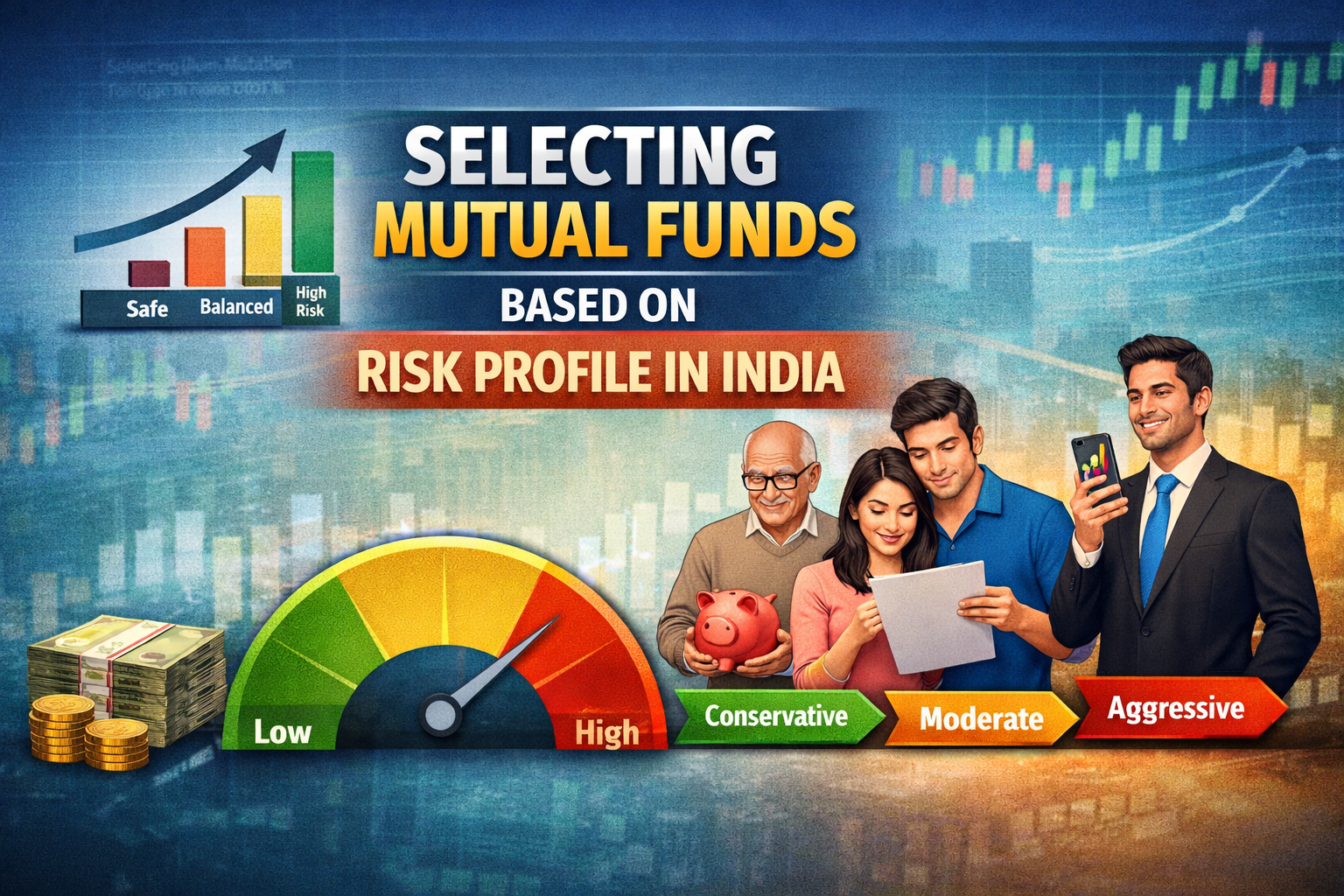
Mutual fund risk profile is the most important factor in selecting the right mutual funds for long-term investing in India.
Most investors make one critical mistake — they select mutual funds based on returns instead of suitability.
They ask:
- Which fund gives the highest return?
- Which fund is trending right now?
But the correct question is:
Which mutual fund matches my risk profile?
Because even a high-performing fund can become a bad investment if it does not align with your ability to handle risk.
If you are starting your journey, it is useful to first understand How to Invest in Mutual Funds for Beginners in India (2026 Step-by-Step Guide) before selecting funds.
At the same time, selecting the right funds is only one part of the journey. Structuring them into a well-balanced portfolio is equally important. To understand how to allocate investments effectively, read our Mutual Fund Portfolio Allocation Strategy (Complete Guide 2026).
💡 Key Takeaways
- Risk profile determines the right mutual fund selection
- Returns should never be the primary selection criterion
- Time horizon plays a critical role in risk-taking ability
- Diversification and allocation improve long-term stability
- Portfolio structure matters as much as fund selection
Direct Answer
Selecting mutual funds based on risk profile means choosing funds that align with your financial capacity, emotional tolerance for market fluctuations, and investment time horizon to ensure consistent and sustainable wealth creation.
What is a Risk Profile in Mutual Funds?
Risk profile defines:
- Your ability to handle market fluctuations
- Your emotional reaction to losses
- Your investment time horizon
It is the foundation of every investment decision.
Understanding your mutual fund risk profile helps you avoid wrong investment decisions and unnecessary losses.
Three Core Factors That Define Risk Profile
1. Risk Capacity (Financial Strength)
- Stable income vs irregular income
- Emergency savings available or not
- Financial responsibilities
Higher financial stability allows higher risk-taking ability.
2. Risk Tolerance (Emotional Strength)
- Can you tolerate a 20–30% portfolio fall?
- Will you panic or stay invested?
Many investors overestimate their risk tolerance, which leads to poor decisions during market downturns.
3. Time Horizon
- Short-term → 0–3 years
- Medium-term → 3–7 years
- Long-term → 7+ years
Longer duration allows higher risk and better returns.
Risk Profiling Framework (Simple Scoring Method)
You can identify your risk profile using a simple scoring method:
Give Yourself Points
- Stable income → +2
- Emergency fund → +2
- Long-term goal → +2
- Comfortable with volatility → +2
- Investment experience → +2
Score Interpretation
- 0–4 → Conservative Investor
- 5–7 → Moderate Investor
- 8–10 → Aggressive Investor
Types of Risk Profiles and Suitable Mutual Funds
1. Conservative Investor
Characteristics
- Avoids volatility
- Focuses on capital protection
- Prefers stability
Suitable Funds
- Liquid funds
- Short-duration debt funds
- Low-risk hybrid funds
Expected Returns
5% to 7%
2. Moderate Investor
Characteristics
- Balanced approach
- Accepts moderate risk
- Seeks steady growth
Suitable Funds
- Hybrid funds
- Balanced advantage funds
- Large-cap funds
Expected Returns
8% to 10%
3. Aggressive Investor
Characteristics
- Comfortable with volatility
- Long-term focus
- Seeks high growth
Suitable Funds
- Mid-cap funds
- Small-cap funds
- Flexi cap funds
Expected Returns
10% to 14%
How to Select Mutual Funds (Step-by-Step Process)
Step 1: Match Risk with Time Horizon
Short-term goals require low risk, while long-term goals allow higher risk.
Step 2: Choose the Correct Fund Category
To understand categories better, refer to Types of Mutual Funds in India: Equity, Debt, and Hybrid Explained.
Step 3: Evaluate Fund Quality
Check:
- Expense ratio
- Performance consistency
- Fund manager track record
- AUM
- Risk-adjusted returns
Step 4: Avoid Return Chasing
High past returns do not guarantee future performance.
Focus on consistency.
Step 5: Diversify Across Categories
Example:
- Large cap
- Mid cap
- Hybrid
Diversification reduces risk.
To understand allocation better, refer to Mutual Fund Portfolio Allocation Strategy (Complete Guide 2026).
Step 6: Align with Financial Goals
If your investments are not linked to goals, decisions become emotional. This is explained clearly in Goal-Based Investing in Mutual Funds (2026 Guide).
Real Portfolio Examples Based on Risk Profile
Conservative Portfolio
- 70% debt funds
- 20% hybrid funds
- 10% equity
Moderate Portfolio
- 40% large cap
- 30% hybrid
- 30% debt
Aggressive Portfolio
- 50% large cap
- 30% mid cap
- 20% small cap
Scenario-Based Understanding
Investor 1 (Age 25)
- Long-term horizon
- High risk capacity
Best approach: Aggressive allocation
Investor 2 (Age 45)
- Medium-term goal
- Moderate risk
Best approach: Balanced allocation
Investor 3 (Retired)
- Low risk capacity
Best approach: Conservative allocation
Advanced Strategy for Smart Investors
Dynamic Asset Allocation
- Increase equity for long-term goals
- Reduce equity near goal completion
Rebalancing Strategy
- Review portfolio every 6–12 months
- Adjust allocation
While strategies like dynamic allocation and rebalancing improve outcomes, many investors still underperform due to behavioral mistakes such as panic selling, overconfidence, and return chasing. To understand these patterns and how to avoid them, refer to our Common Mutual Fund Mistakes and Smart Investor Strategies (2026 Guide).
How SIP Helps Manage Risk
SIP helps through:
- Rupee cost averaging
- Disciplined investing
- Long-term compounding
To understand this deeply, read How SIP Builds Wealth Through Compounding (With Simple Examples).
Common Mistakes to Avoid
- Selecting funds based on returns
- Ignoring risk profile
- No time horizon
- Overexposure to risky funds
- Panic selling
To understand these mistakes in depth and how they impact long-term returns, it is important to look beyond fund selection and focus on investor behavior and decision-making patterns. For a complete breakdown of common mistakes and practical strategies to avoid them, read our Common Mutual Fund Mistakes and Smart Investor Strategies (2026 Guide).
Important Reality About Risk and Return
High return always comes with high volatility.
There is no shortcut.
Conclusion
Selecting mutual funds is not about finding the best fund.
It is about finding the right fund for you.
Once you understand your risk profile, the next step is structuring your investments properly to achieve long-term stability and growth. For a complete roadmap, refer to Mutual Fund Portfolio Allocation Strategy (Complete Guide 2026).
Final Thought
Right investment decisions are not based on market trends.
They are based on self-awareness.
Frequently Asked Questions (FAQs)
What is a risk profile?
It defines your ability to handle risk and volatility.
Can beginners take high risk?
Only if they have a long-term horizon.
How often should I review my risk profile?
Once a year or during major life changes.
Disclaimer
This content is for educational purposes only and does not constitute investment advice.
Mutual fund investments are subject to market risks. Investors should read all scheme-related documents carefully before investing and consider their financial goals, risk tolerance, and investment horizon.
Share this guide with your friends, family, and colleagues to help them make better financial decisions.
If this article helped you, share it with at least one person who needs this guidance.
Leave a Reply